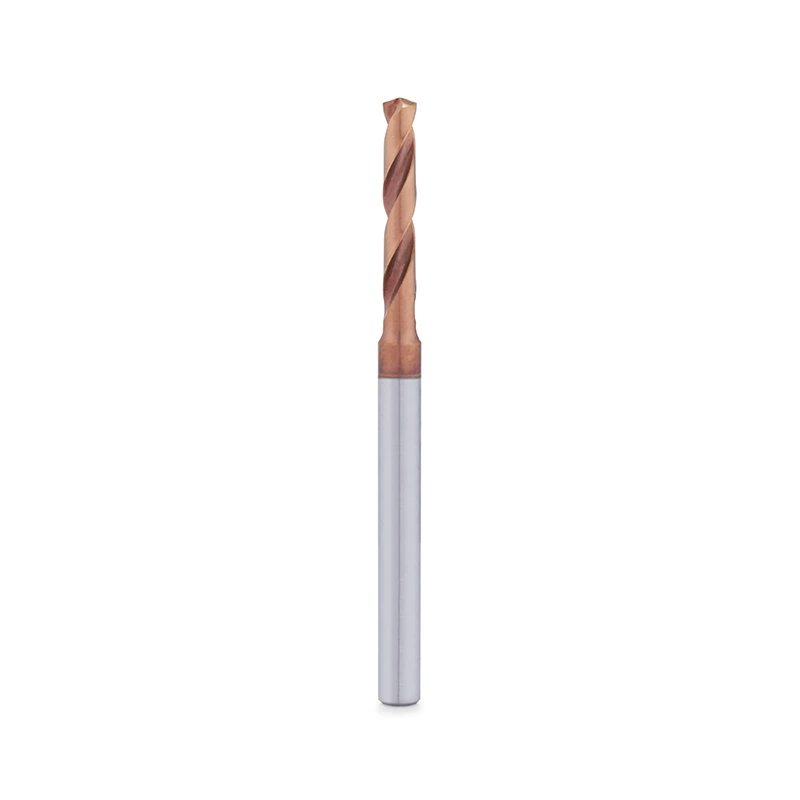
How to Choose a Carbide Drill for Metalworking
Choosing the right carbide drill requires matching the tool to the workpiece material, hole diameter and depth, machine rigidity, coolant delivery, chip evacuation and production requirements. This guide explains how to compare drill types and select a suitable carbide drill for CNC metalworking applications.
Quick Answer: Which Carbide Drill Should You Choose?
For stable CNC machining, start with the workpiece grade and hardness, then define the hole diameter, required depth, tolerance and bottom form. Check spindle condition, toolholding, coolant delivery and chip evacuation before choosing the drill length, geometry and coating. Do not select a drill from diameter or coating alone.
| Machining requirement | Typical tool direction | Primary selection concern |
|---|---|---|
| Short, general CNC holes | 3xD standard carbide drill | Rigidity, entry stability and material-specific geometry |
| Medium-depth production holes | 5xD or 8xD carbide drill | Runout, chip evacuation and coolant access |
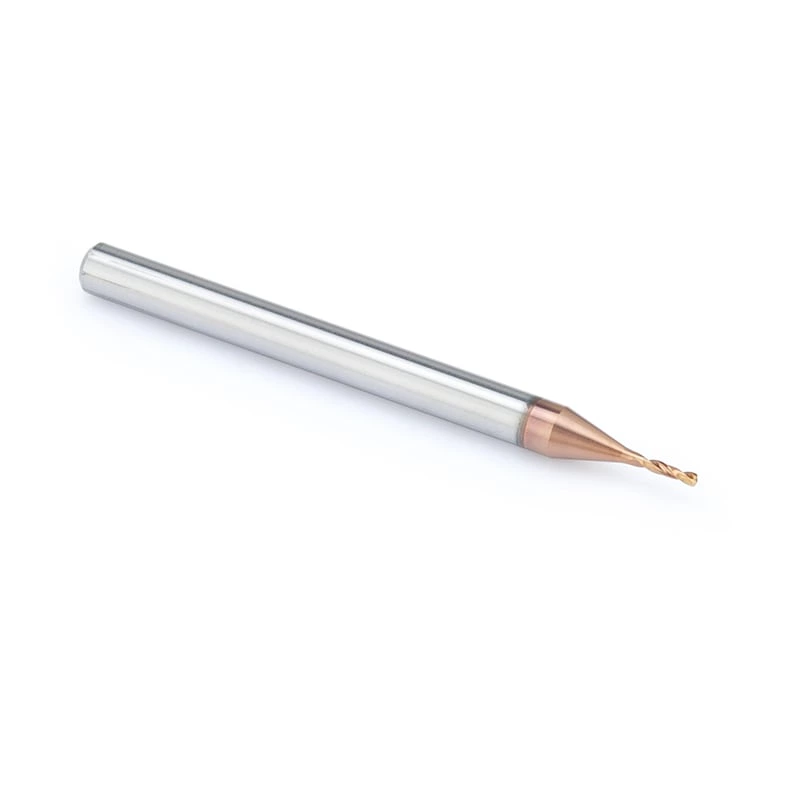
| Small-diameter holes | Micro carbide drill | Runout, edge strength, chip flow and handling |
| Long holes | Deep-hole carbide drill | Pilot guidance, coolant, chip evacuation and drilling procedure |
| Difficult coolant access or chip evacuation | Through-coolant carbide drill | Coolant pressure, flow, chip form and flute design |
| Special diameter, step or bottom geometry | Custom carbide drill | Drawing, tolerance, operation sequence and production volume |
Important: These are selection directions, not universal rules. Product length categories and application limits vary by drill design and manufacturer.

Five Factors That Determine Carbide Drill Selection
1. Workpiece Material and Condition
Record the material family, exact grade, hardness and heat-treatment condition. Stainless steel, aluminum, hardened steel, cast iron and titanium alloys produce different chip forms, cutting temperatures and edge-loading conditions. The carbide grade, edge preparation, flute form and coating must be selected as a system for the actual material.
2. Hole Geometry and Quality Requirements
Define the diameter, depth, through-hole or blind-hole condition, tolerance, positional requirement, surface-finish requirement and bottom geometry. A 6 mm hole at 3xD and a 6 mm hole at 20xD present different guidance, coolant and chip-evacuation requirements even though the diameter is identical.
3. Machine, Spindle and Toolholding Condition
Solid carbide is rigid and wear resistant, but it is less forgiving of vibration, excessive runout, unstable workholding and impact than HSS or cobalt-alloyed HSS. Check the machine type, spindle condition, holder condition and tool overhang before selecting a high-performance carbide drill.
4. Coolant and Chip Evacuation
Confirm whether external or through-tool coolant is available, together with the available pressure and flow. Hole depth, workpiece material, chip form, flute volume and cutting parameters all affect whether chips can leave the hole without packing.
5. Standard or Custom Tooling
Use a standard drill when an available diameter, length and geometry match the application. Consider a custom tool when the component requires a special diameter, step, flat bottom, non-standard tolerance, combined operation or application-specific coolant configuration.
HSS vs Cobalt vs Solid Carbide for Metal Drilling
Tool material should match both the metal and the machining environment. Solid carbide is not automatically the correct choice for every hole.
| Tool material | Where it is commonly useful | Main limitation |
|---|---|---|
| HSS | General-purpose work, lower volumes and less rigid equipment | Lower wear resistance and cutting-speed capability than carbide |
| Cobalt-alloyed HSS | Tough steels, stainless steel and applications needing more hot hardness while retaining toughness | Does not provide the rigidity and wear resistance of solid carbide |
| Solid carbide | Stable CNC production, repeat machining, small diameters, deeper holes and demanding materials | More sensitive to runout, vibration, unstable workholding and impact |
Evaluate total cost per acceptable hole rather than tool price alone. The relevant inputs include tool life, cycle time, changeover time, scrap, hole quality and process stability. The result must be calculated from the actual machining process; it should not be assumed from tool material alone.
How to Choose a Carbide Drill by Hole Depth
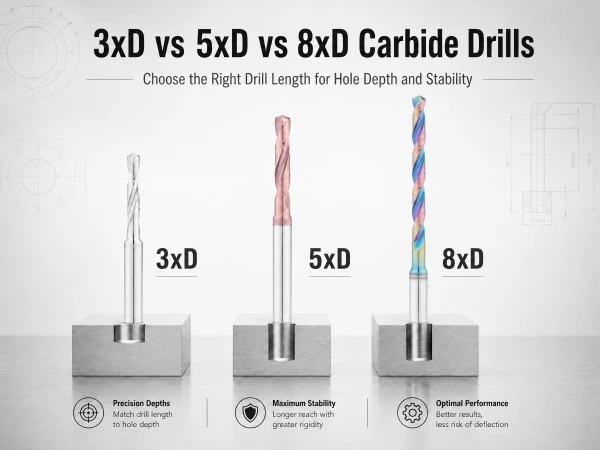
Use the shortest drill that safely reaches the required depth. Increasing length reduces system rigidity and makes runout, guidance, coolant delivery and chip evacuation more critical.

| Typical depth range | Selection focus | Starting direction |
|---|---|---|
| 3xD | Maximum rigidity, stable entry and short-hole productivity | 3xD standard carbide drill |
| 5xD | General production drilling with additional attention to coolant and chips | 5xD standard carbide drill |
| 8xD | Runout, flute capacity, coolant access and entry stability | 8xD standard carbide drill |
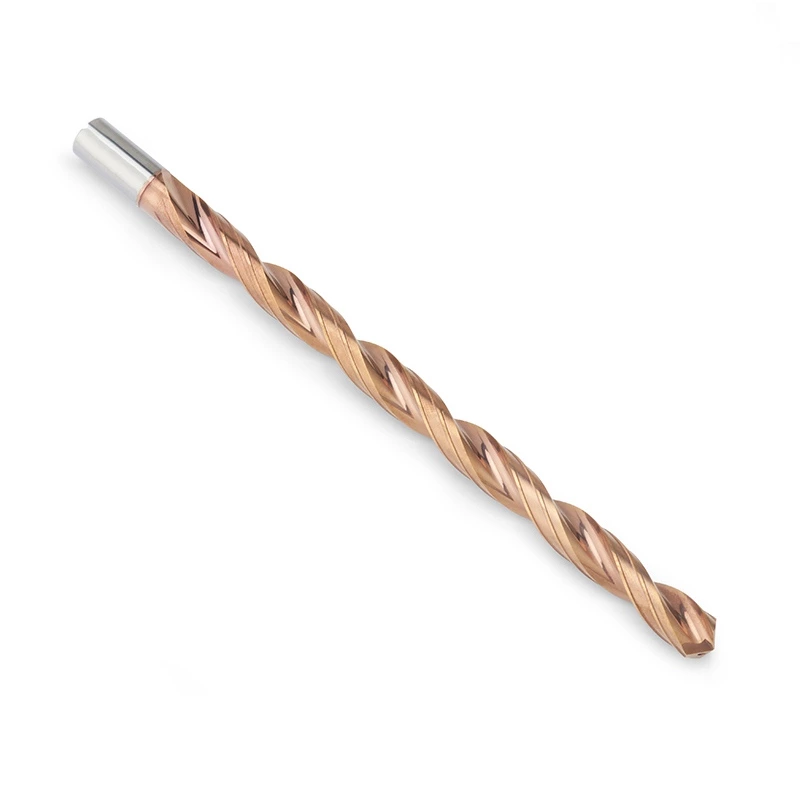
| Beyond the standard range | Pilot-hole compatibility, low-speed entry, through coolant and controlled withdrawal | Application-specific deep-hole drill |
Long-drill procedures vary by product family. Follow the drill manufacturer's entry, pilot-hole, coolant and withdrawal instructions rather than applying a generic cycle to every long drill.
How Workpiece Material Changes Drill Selection
Carbon and Alloy Steel
Balance edge strength, wear resistance, chip evacuation and process stability. The grade, hardness and heat-treatment condition determine the suitable geometry, coating and starting parameters.
Stainless Steel
Prioritize stable cutting, controlled chip formation and reliable coolant delivery. Avoid rubbing and unstable feed because work hardening and heat concentration can make the next cutting engagement more difficult.
Hardened Steel
Specify the steel grade and actual hardness before selecting a drill. Solid carbide may be appropriate on a rigid CNC machine, but the usable hardness range depends on the carbide grade, geometry, coating, runout and cutting conditions. “For hardened steel” is not a complete tool specification.
Aluminum
Favor a sharp cutting edge, free chip flow, smooth flute surfaces and geometry that limits material adhesion. A drill optimized for steel should not automatically be used as the first choice for aluminum.
Titanium and Heat-Resistant Alloys
These materials require close control of edge condition, coolant delivery, chip evacuation, machine stability and cutting parameters. Generic speed-and-feed values should not be used without the exact alloy, tool and machining conditions.
For a material-first route, use the Carbide Drills by Material selection center.
Coolant Delivery and Drill Geometry Must Work Together
External vs Through-Tool Coolant
External coolant may be sufficient for shorter holes when the cutting zone is accessible and chips leave the hole freely. Through-tool coolant delivers fluid nearer the cutting zone and can improve cooling and chip evacuation in deeper or thermally demanding applications. Selection still depends on chip form, coolant pressure and flow, drill geometry, material and production requirements—not depth alone.

Geometry Factors
| Geometry factor | Main process influence |
|---|---|
| Point geometry | Entry behavior, centering and cutting forces |
| Cutting-edge preparation | Edge strength and resistance to chipping |
| Flute volume and surface | Chip capacity and evacuation |
| Core thickness | Drill rigidity and available flute space |
| Margin design | Guidance, friction and hole stability |
| Coolant-hole design | Coolant delivery and chip removal |
Coating should also be evaluated as part of the complete drill design. A coating name does not, by itself, establish that a drill is suitable for a specific material.
Carbide Drill Selection Matrix
| Requirement | Start with | Confirm before ordering |
|---|---|---|
| General CNC production hole | Solid carbide drill bits | Material, diameter, depth, tolerance and coolant |
| Small-diameter precision hole | Micro carbide drill | Runout, holder, entry condition and chip evacuation |
| Long or deep hole | Deep-hole carbide drill | Pilot hole, coolant, drilling cycle and exit condition |
| Chip evacuation is limiting the process | Through-coolant carbide drill | Pressure, flow, chip form and filtration |
| Special or combined hole feature | Custom carbide drill | Drawing, tolerances, sequence, quantity and current problem |
Common Carbide Drill Selection Mistakes
- Choosing by diameter alone. Diameter does not define length, geometry, coating, coolant design or intended material.
- Using a longer drill than necessary. Extra length reduces rigidity and increases sensitivity to runout and vibration.
- Using one geometry for every material. Chip formation, adhesion, heat and edge-loading behavior vary by workpiece.
- Ignoring machine and holder condition. A higher-priced drill cannot compensate for severe runout, unstable workholding or a damaged holder.
- Blaming the substrate for a chip-control problem. Chip packing may result from feed, coolant, flute design, depth or material—not simply “the wrong carbide.”
- Selecting through coolant from depth alone. Confirm chip form, material, pressure, flow and drill geometry as well.
What Information Is Needed to Select a Carbide Drill?
Provide the following information for a useful recommendation or quotation:
- Workpiece: material, grade, hardness and heat treatment
- Hole: diameter, depth, through/blind, tolerance and bottom form
- Machine: machine type, spindle condition, holder and maximum speed
- Coolant: external or through-tool, fluid type, pressure and flow if known
- Production: quantity, current cycle, tool life and existing problem
- Custom feature: component drawing or current tool drawing
Frequently Asked Questions
What is the fastest way to receive an accurate drill recommendation?
Provide the exact workpiece grade and hardness, hole diameter and depth, tolerance, machine and holder information, coolant conditions, production quantity and the current machining problem. Add a drawing for non-standard holes or combined features.
Should I always choose the shortest carbide drill?
Choose the shortest drill that safely reaches the required depth and provides the necessary flute length. Shorter tools are generally more rigid, but clearance, regrinding allowance, chip space and component geometry must also be considered.
Does every deep hole require through-tool coolant?
No single depth rule applies to every drill. Through-tool coolant becomes increasingly useful as coolant access and chip evacuation become more difficult, but the decision also depends on material, chip form, flute design, coolant pressure and process speed.
When should I choose solid carbide instead of HSS or cobalt?
Consider solid carbide when the operation uses rigid CNC equipment and requires repeatability, wear resistance, smaller diameters, deeper holes or higher production output. HSS or cobalt may be more forgiving for handheld drilling, unstable setups or low-volume work.
Does a long carbide drill need a pilot hole?
Many long-drill systems use a compatible pilot hole and a controlled low-speed entry, but the procedure depends on the specific drill family. Follow the manufacturer's instructions for pilot diameter, depth, entry speed, coolant start and withdrawal.
Can one carbide drill geometry machine every metal?
A general-purpose drill may cover several material groups, but one geometry is not optimal for every metal. Material-specific chip formation, adhesion, heat and edge-load conditions influence geometry, coating, carbide grade and cutting parameters.
 Need a Custom Tool solution?