3xD vs 5xD vs 8xD Carbide Drills: How to Choose the Right Length
Choosing the correct carbide drill length affects rigidity, chip evacuation, coolant delivery, hole accuracy and tool life. A drill should provide enough reach for the required hole depth without adding unnecessary overhang or reducing process stability.
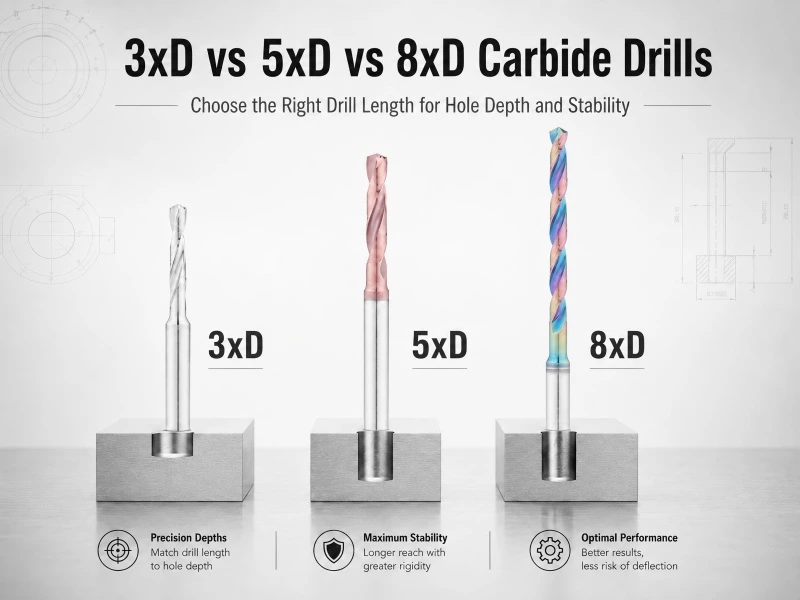
Hole diameter is usually the first specification considered when selecting a carbide drill, but drilling depth can be equally important. Two drills with the same diameter may behave very differently if one is designed for 3xD drilling and the other for 8xD drilling.
A longer drill provides additional reach, but it also creates a longer chip-evacuation path and increases sensitivity to runout, vibration and coolant conditions. The correct approach is therefore not to select the longest drill available, but to choose the shortest tool that safely reaches the required depth.
What Does 3xD, 5xD or 8xD Mean?
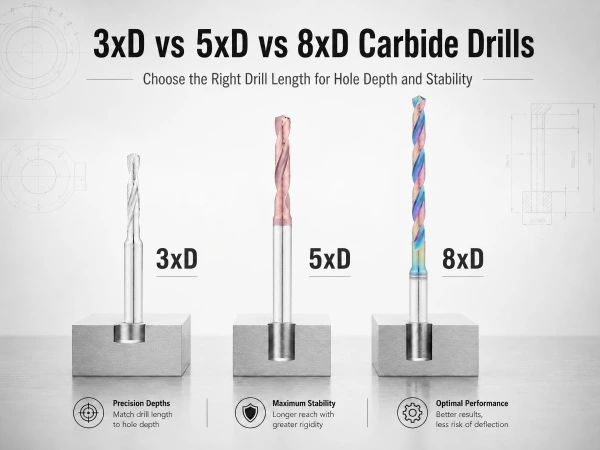
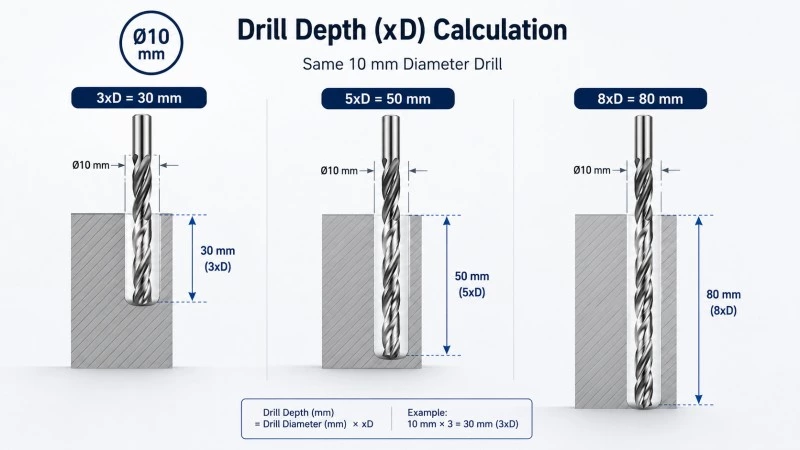
The term xD expresses drilling depth as a multiple of the nominal drill diameter.
For example, when using a 10 mm drill:
-
3xD represents a drilling depth of approximately 30 mm
-
5xD represents a drilling depth of approximately 50 mm
-
8xD represents a drilling depth of approximately 80 mm
The same principle applies to other diameters.
For a 6 mm drill:
-
3xD is approximately 18 mm
-
5xD is approximately 30 mm
-
8xD is approximately 48 mm
The xD value normally describes the intended drilling-depth range rather than the complete physical length of the tool. The actual flute length and overall length may include additional allowance for the drill point, chip space, retraction and toolholding.
For blind holes, the drill-point shape must also be considered. A conventional pointed drill creates a conical bottom, so the programmed depth and usable cylindrical depth are not always identical.
Why Carbide Drill Length Matters
Drill length affects more than reach.
As the drill becomes longer, several conditions change:
-
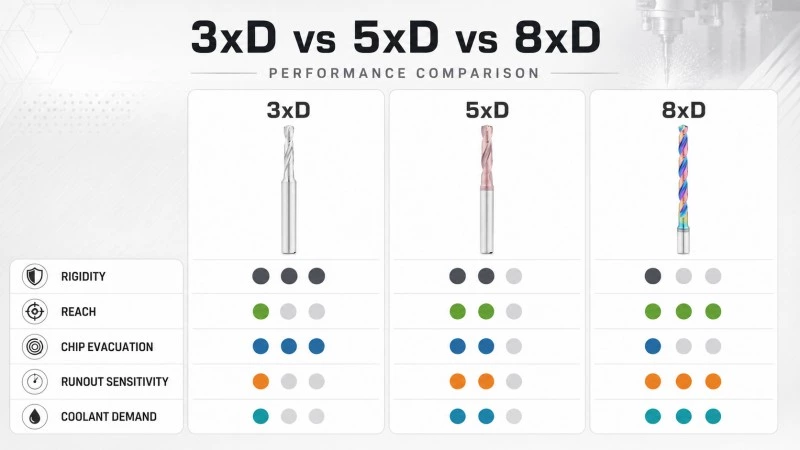
Overall tool rigidity decreases
-
Sensitivity to runout increases
-
Chip travel distance becomes longer
-
Coolant delivery becomes more important
-
Hole straightness becomes harder to maintain
-
Entry conditions have a greater influence
-
Toolholder accuracy becomes more critical
-
The risk of chip accumulation increases
This does not mean that longer drills are unreliable. A properly selected 8xD drill can provide stable performance when the machine, coolant and cutting conditions are suitable.
The main problem occurs when a long drill is used unnecessarily or when the process is not adjusted for the greater drilling depth.
A 3xD drill should normally be preferred when it provides enough usable depth. Moving directly to an 8xD drill for a shallow hole can add overhang without providing a machining advantage.
3xD Carbide Drills
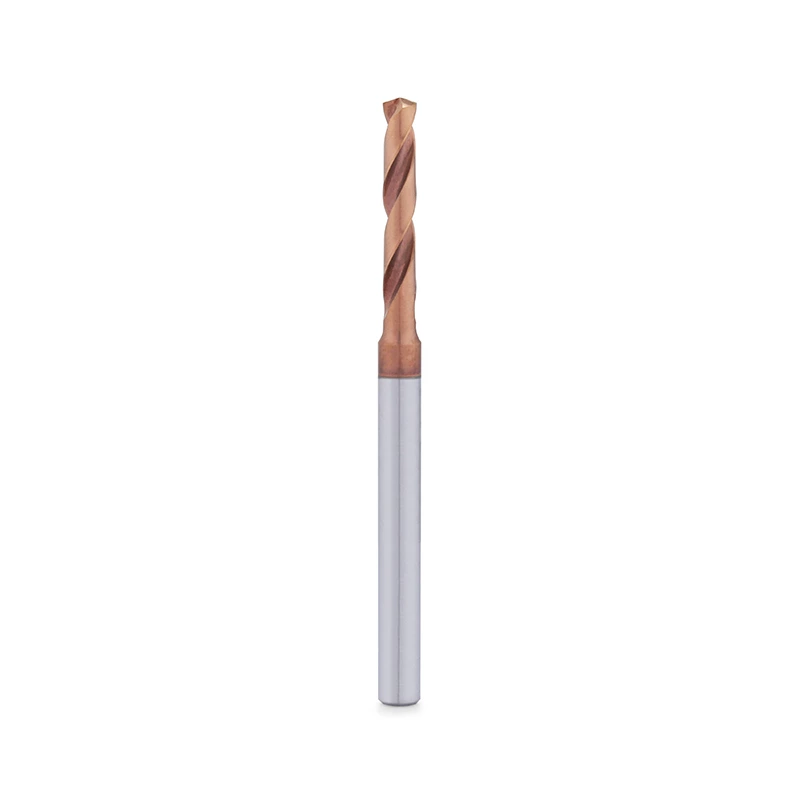
A 3xD carbide drill is designed for relatively shallow holes and is generally the most rigid option among the three common depth ratios.
Its shorter cutting section and overall structure help reduce deflection during drilling.
Typical applications include:
-
Shallow blind holes
-
Through holes in thin or medium-thickness components
-
General CNC drilling
-
High-volume production
-
Holes requiring stable position accuracy
-
Components with limited chip-travel distance
-
Applications using external coolant
-
Operations requiring high tool rigidity
Main Advantages of 3xD Drills
The main benefit of a 3xD drill is rigidity.
A shorter tool is less sensitive to bending and vibration, which can support:
-
Stable drill-point entry
-
Better hole-position control
-
Consistent hole diameter
-
Lower sensitivity to machine vibration
-
Reduced risk of tool deflection
-
More predictable batch production
The shorter flute also allows chips to leave the hole over a relatively short distance.
For materials that produce manageable chips, external coolant may be sufficient when the coolant stream can reach the drilling area effectively.
Limitations of 3xD Drills
The main limitation is reach.
A 3xD drill cannot safely produce a hole that exceeds its intended drilling depth. Using the tool beyond its recommended range may restrict chip evacuation and leave insufficient flute space outside the workpiece.
A drill should not be selected only because its overall length appears sufficient. The usable cutting and flute length must match the actual hole depth.
When to Choose a 3xD Drill
Choose a 3xD carbide drill when:
-
The hole depth is within approximately three times the diameter
-
High rigidity is important
-
The hole is relatively shallow
-
External coolant can reach the cutting zone
-
The machine has limited space for tool overhang
-
Stable hole position is a priority
-
A shorter tool can complete the operation safely
5xD Carbide Drills
A 5xD carbide drill provides more reach than a 3xD drill while maintaining a relatively stable structure.
It is one of the most versatile drill-length options for general CNC production.
Typical applications include:
-
Medium-depth blind holes
-
Medium-depth through holes
-
Steel drilling
-
Stainless steel drilling
-
Aluminum drilling
-
Cast-iron drilling
-
Standard production components
-
Applications using internal or external coolant
Why 5xD Is a Common General-Purpose Choice
Many industrial holes are deeper than the practical range of a 3xD drill but do not yet require a dedicated deep-hole process.
The 5xD range often provides a useful balance between:
-
Reach
-
Rigidity
-
Chip evacuation
-
Tool accessibility
-
Coolant requirements
-
Production flexibility
For this reason, 5xD drills are frequently used as a standard option in machining centers.
External or Internal Coolant at 5xD?
Both methods may be suitable.
External coolant may work effectively when:
-
Chips are short and controlled
-
The coolant nozzles are positioned correctly
-
The hole is a through hole
-
The material does not create severe adhesion
-
The drill diameter provides sufficient flute space
-
Production conditions are stable
Internal coolant may be preferred when:
-
The hole is blind
-
Chips are long
-
Stainless steel is being drilled
-
Cutting heat is high
-
Production quantities are large
-
Tool life must remain predictable
-
External coolant cannot reach the drill point reliably
The correct decision depends on the complete application rather than the 5xD label alone.
When to Choose a 5xD Drill
Choose a 5xD carbide drill when:
-
The required depth exceeds the range of a 3xD drill
-
The application requires moderate additional reach
-
The setup remains rigid
-
Chip evacuation can be controlled
-
External or internal coolant is available as required
-
The hole depth does not justify an 8xD drill
For a hole depth of approximately 4xD, a 5xD drill is normally more suitable than choosing an 8xD drill only for additional safety margin.
8xD Carbide Drills
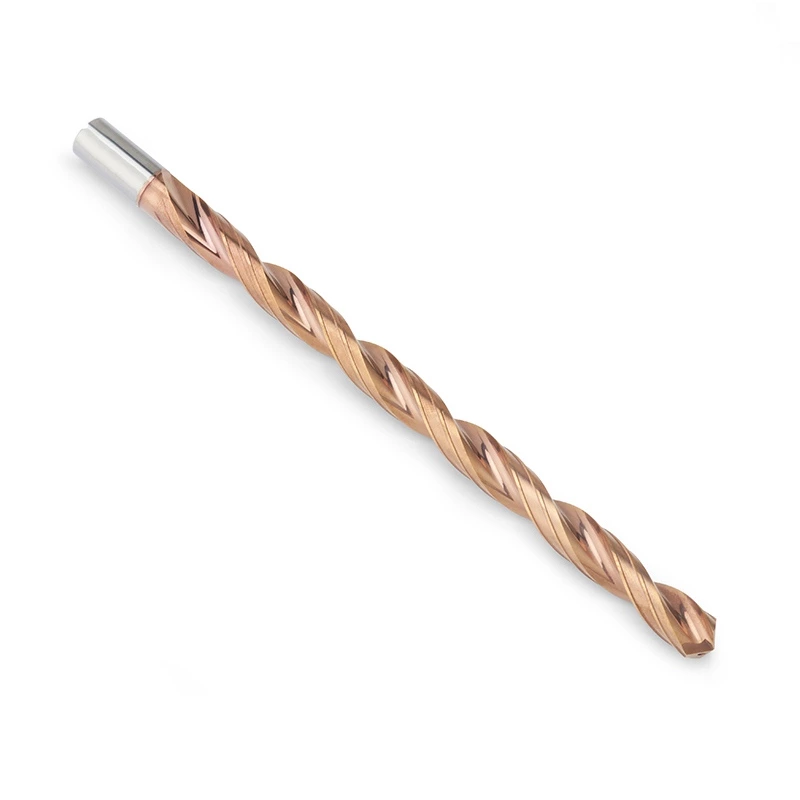
An 8xD carbide drill is intended for deeper holes where a standard short drill cannot provide enough reach.
At this depth, drilling conditions become more demanding because the cutting edges operate farther from the hole entrance.
The chips must travel a longer distance through the flutes, and coolant must reach a more enclosed cutting zone.
Typical applications include:
-
Deeper blind holes
-
Deeper through holes
-
Automotive components
-
Hydraulic components
-
Mold components
-
Machinery parts
-
Stainless steel applications
-
High-volume CNC production
-
Applications using internal coolant
Main Challenges at 8xD
Compared with a 3xD or 5xD drill, an 8xD tool is more sensitive to:
-
Tool runout
-
Spindle condition
-
Toolholder accuracy
-
Workpiece clamping
-
Coolant flow
-
Chip formation
-
Tool entry
-
Cutting parameters
-
Excessive tool overhang
A small amount of runout at the toolholder can create a larger deviation at the drill point because of the increased tool length.
Uneven cutting load can then contribute to:
-
Hole-position deviation
-
Oversized holes
-
Uneven margin wear
-
Cutting-edge chipping
-
Vibration
-
Premature breakage
Why Internal Coolant Is Often Preferred
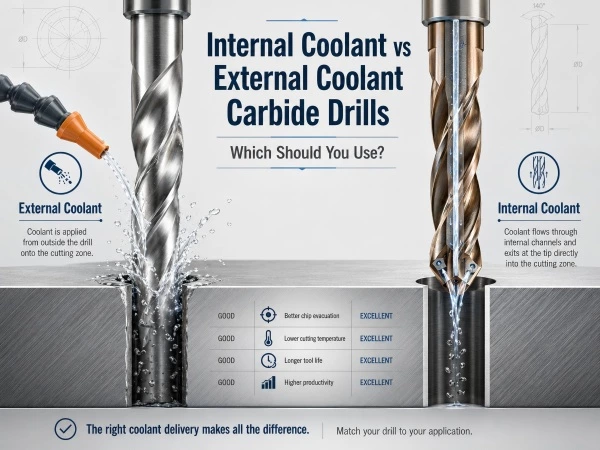
Internal coolant becomes increasingly useful at approximately 8xD because it delivers fluid closer to the cutting edges.
This can help:
-
Remove chips from the bottom of the hole
-
Reduce chip packing
-
Control cutting temperature
-
Lubricate the drill margins
-
Support consistent tool life
-
Reduce repeated cutting of trapped chips
Internal coolant does not remove the need for correct cutting parameters.
If the feed is too low, chips may not form properly. If the feed is too high, cutting load may become excessive. Insufficient coolant flow or poor filtration can also reduce the effectiveness of the internal channels.
When to Choose an 8xD Drill
Choose an 8xD carbide drill when:
-
The required hole depth exceeds the practical range of a 5xD drill
-
The machine and toolholder provide sufficient rigidity
-
Runout can be controlled
-
Suitable coolant delivery is available
-
Chip evacuation has been evaluated
-
The drilling cycle can follow the recommended operating method
-
The extra reach is genuinely required
An 8xD drill should not be selected for a shallow hole when a shorter drill can complete the operation.
3xD vs 5xD vs 8xD: Main Comparison
| Selection factor | 3xD carbide drill | 5xD carbide drill | 8xD carbide drill |
|---|---|---|---|
| Typical hole depth | Shallow | Medium | Deeper |
| Relative rigidity | Highest | High | Lower than shorter drills |
| Chip travel distance | Short | Moderate | Longer |
| Runout sensitivity | Lower | Moderate | Higher |
| External coolant suitability | Often suitable | Application dependent | More limited |
| Internal coolant need | Optional in many cases | Depends on application | Often preferred |
| Setup requirements | Standard rigid setup | Stable CNC setup | Higher rigidity and accuracy required |
| Typical use | General shallow drilling | General-purpose CNC drilling | Deeper production holes |
| Tool-entry sensitivity | Lower | Moderate | Higher |
| Chip-evacuation difficulty | Lower | Moderate | Higher |
This table is a general guide. Workpiece material, diameter, hole type, coating, geometry and machine conditions can change the selection.
Select the Shortest Suitable Drill
One of the most important drill-selection rules is:
Use the shortest drill that safely reaches the required depth.
A shorter drill generally provides:
-
Higher rigidity
-
Lower runout sensitivity
-
Better hole-position control
-
Easier chip evacuation
-
More stable cutting
-
Lower risk of deflection
For example:
-
A 2xD hole normally does not require a 5xD or 8xD drill
-
A 4xD hole normally fits the working range of a 5xD drill
-
A 7xD hole normally requires an 8xD drill
-
A hole deeper than 8xD may require a dedicated deep-hole drill
Additional length should only be selected when it is required by the workpiece, fixture or hole depth.
How Workpiece Material Affects Drill-Length Selection
The same depth ratio can behave differently in different materials.
Steel
Steel usually allows stable drilling when the geometry, coating and parameters match the material grade.
For steel:
-
3xD is suitable for shallow and rigid production drilling
-
5xD is a common general-purpose option
-
8xD requires greater attention to coolant and chip evacuation
The steel grade and hardness should be confirmed before selecting the cutting parameters.
Stainless Steel
Stainless steel often produces long chips and concentrated cutting heat.
As hole depth increases, chip evacuation becomes more difficult.
For stainless steel:
-
3xD may operate with effective external or internal coolant
-
5xD often benefits from internal coolant
-
8xD generally requires reliable internal coolant and controlled parameters
Insufficient feed can cause rubbing and work hardening. Chip formation must remain stable throughout the drilling depth.
Aluminum
Aluminum can be drilled at relatively high cutting speeds, but the material may adhere to the cutting edges and flute surfaces.
Important requirements include:
-
Sharp cutting geometry
-
Smooth flute surfaces
-
Sufficient chip space
-
Effective lubrication
-
Stable chip evacuation
External coolant may be suitable for short holes. Internal coolant becomes more useful for deeper holes, blind holes and high-volume production.
Cast Iron
Cast iron often produces short chips, which can simplify chip evacuation.
However, abrasive wear and casting skin may affect tool life.
The appropriate drill length should still be selected according to actual hole depth. A longer drill should not be chosen simply because the material produces short chips.
Titanium and High-Temperature Alloys
Titanium and heat-resistant alloys place high thermal and mechanical loads on the cutting edges.
As the hole becomes deeper, coolant delivery and process stability become increasingly important.
An 8xD application in titanium generally requires more careful control than an 8xD application in free-cutting steel.
Important factors include:
-
Coolant flow
-
Cutting speed
-
Feed
-
Runout
-
Toolholder rigidity
-
Chip formation
-
Drill geometry
Through Holes vs Blind Holes
Hole structure affects drill-length selection and chip evacuation.
Through Holes
In a through hole, the drill eventually exits the opposite side of the component.
Important considerations include:
-
Breakthrough stability
-
Exit burrs
-
Reduced support at the hole exit
-
Fixture clearance
-
Drill-point allowance
-
Cutting-load changes during exit
The drill must have enough usable length to pass fully through the workpiece without the shank or non-cutting section entering the hole incorrectly.
Blind Holes
In a blind hole, chips must return through the flutes because they cannot exit through the bottom.
Blind holes are therefore more sensitive to:
-
Chip accumulation
-
Coolant delivery
-
Hole-bottom clearance
-
Drill-point geometry
-
Programmed depth
-
Tool retraction
When calculating blind-hole depth, distinguish between:
-
Total drill-point depth
-
Full-diameter cylindrical depth
-
Required flat or conical bottom shape
A standard pointed drill cannot create a completely flat bottom. A flat-bottom drill may be required when the drawing specifies a flat seating surface.
External Coolant vs Internal Coolant by Drill Length
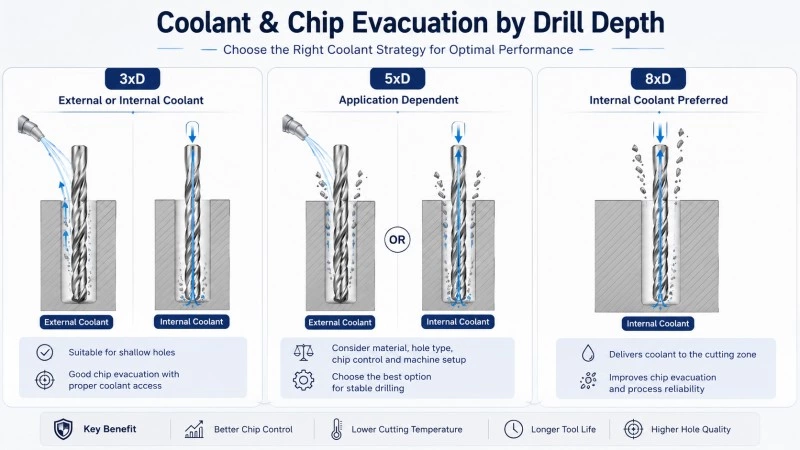
Coolant selection should match both material and drilling depth.
3xD
External coolant is often sufficient when:
-
The hole is shallow
-
Chips evacuate freely
-
The cutting zone is accessible
-
The coolant nozzle is positioned correctly
Internal coolant can still improve consistency in high-volume or difficult-material applications.
5xD
The cooling method becomes application dependent.
Internal coolant is more valuable when:
-
The hole is blind
-
The material produces long chips
-
Stainless steel is being drilled
-
Tool life varies
-
Production is continuous
8xD
Internal coolant is generally the more reliable starting point.
The machine should provide suitable:
-
Coolant pressure
-
Coolant flow
-
Filtration
-
Toolholder sealing
-
Channel cleanliness
The cooling system must transport chips, not only create a visible stream of liquid.
Machine and Toolholder Requirements
Longer carbide drills require greater attention to the complete machining system.
Check the following before using a 5xD or 8xD drill:
-
Spindle condition
-
Toolholder accuracy
-
Holder cleanliness
-
Tool clamping length
-
Radial runout
-
Workpiece rigidity
-
Fixture stability
-
Drill overhang
-
Coolant availability
-
Machine power
-
Programmed entry conditions
A high-quality drill can still fail when the toolholder is worn or contaminated.
Dirt, chips or damage inside the holder can prevent the drill from running concentrically.
Runout should be measured as close to the cutting section as practical, not only at the shank.
Do 8xD Drills Require a Pilot Hole?
Not every 8xD drill requires a pilot hole.
Many self-centering solid carbide drills are designed to enter a flat and stable surface directly when used under the recommended conditions.
However, a pilot hole or guided entry may be required when:
-
The drill design specifically requires one
-
The hole is deeper than the drill’s standard direct-entry range
-
The workpiece surface is angled
-
The entry surface is curved
-
The surface is interrupted
-
The tool is extremely long
-
The application uses a dedicated deep-hole process
The operating procedure should match the specific drill design.
A pilot hole that is too small, too large, too shallow or misaligned can also create problems.
Common Drill-Length Selection Mistakes
Selecting the Longest Drill for Flexibility
Keeping one long drill for every hole depth may appear convenient, but unnecessary length reduces rigidity and can increase runout sensitivity.
Confusing Overall Length with Drilling Depth
A tool may appear long enough while still lacking sufficient flute or cutting length for the required hole.
Ignoring the Drill Point in Blind Holes
Programmed depth must account for the conical point when full-diameter depth is specified.
Using External Coolant Without Checking Access
A visible coolant stream does not guarantee that liquid reaches the drill point, especially at 5xD or 8xD.
Applying the Same Parameters to Every Length
A longer drill may require different entry conditions, coolant strategy and cutting parameters.
Ignoring Toolholder Condition
Long drills amplify the effects of runout and poor clamping.
Using a Standard Drill on an Angled Surface
Angled, curved or interrupted entry surfaces may cause the drill to deflect or chip unless a suitable strategy or tool is used.
Practical Selection Examples
Example 1: 8 mm Diameter, 20 mm Deep Hole
The depth ratio is:
20 ÷ 8 = 2.5xD
A 3xD drill is normally the appropriate starting point.
Choosing a 5xD or 8xD drill would add unnecessary length.
Example 2: 10 mm Diameter, 42 mm Deep Hole
The depth ratio is:
42 ÷ 10 = 4.2xD
A 5xD drill is normally suitable.
A 3xD drill does not provide enough reach, while an 8xD drill is longer than necessary.
Example 3: 6 mm Diameter, 45 mm Deep Hole
The depth ratio is:
45 ÷ 6 = 7.5xD
An 8xD drill is the appropriate starting point.
Coolant delivery, toolholder runout and chip evacuation should be evaluated carefully.
Example 4: 5 mm Diameter, 65 mm Deep Hole
The depth ratio is:
65 ÷ 5 = 13xD
A standard 3xD, 5xD or 8xD drill is not suitable.
A dedicated 12xD or longer deep-hole drill and a corresponding operating procedure should be evaluated.
A Practical Carbide Drill Selection Checklist
Before choosing 3xD, 5xD or 8xD, confirm:
-
Drill diameter
-
Total hole depth
-
Full-diameter hole depth
-
Through hole or blind hole
-
Workpiece material
-
Material hardness
-
Entry-surface condition
-
Required hole tolerance
-
Required bottom shape
-
Machine rigidity
-
Spindle condition
-
Toolholder accuracy
-
External or internal coolant
-
Coolant pressure and flow
-
Production quantity
-
Current drilling problem
Calculate the depth ratio using:
Hole depth ÷ Drill diameter = Required xD ratio
Then select the shortest drill with sufficient usable cutting depth and chip space.
Frequently Asked Questions
Is a 3xD drill always more accurate than an 8xD drill?
A 3xD drill is generally more rigid and less sensitive to runout. However, a properly selected and correctly applied 8xD drill can also produce accurate holes.
Can a 5xD drill produce a 3xD hole?
Yes, but a 3xD drill will normally provide greater rigidity if it is available and suitable for the application.
Can an 8xD drill be used with external coolant?
It may work in selected materials and setups, but internal coolant generally provides greater process reliability as hole depth increases.
Does xD refer to flute length?
Not exactly. It refers to the intended drilling-depth ratio. Actual flute length may include additional allowance and varies by tool design.
Should the drill point be included in the hole-depth calculation?
For blind holes, the drill point must be considered. The total drilled depth and full-diameter cylindrical depth are not the same with a conventional pointed drill.
Do all 8xD drills require peck drilling?
No. Some carbide drills are designed for continuous drilling. The correct method depends on the drill design, workpiece material, coolant and manufacturer’s recommendations.
When should a deep-hole drill be selected?
A dedicated deep-hole drill should be considered when the required depth exceeds the practical range of standard 3xD, 5xD or 8xD drills, or when the application requires specialized coolant delivery and entry procedures.
Is internal coolant required for stainless steel?
It is not required in every stainless steel application, but it becomes increasingly useful as the hole becomes deeper and chip evacuation becomes more difficult.
Conclusion
The difference between 3xD, 5xD and 8xD carbide drills is not simply tool length.
As drilling depth increases:
-
Rigidity decreases
-
Runout sensitivity increases
-
Chip travel becomes longer
-
Coolant delivery becomes more important
-
Machine and toolholder requirements become stricter
A 3xD drill is normally the best choice for shallow holes requiring maximum rigidity. A 5xD drill provides a practical balance for medium-depth CNC drilling. An 8xD drill provides additional reach but requires stronger control of coolant, chip evacuation, runout and tool entry.
The most reliable rule is to select the shortest drill that safely reaches the required depth.
Discuss Your Carbide Drilling Application
Landun CNC Tool supplies 3xD, 5xD, 8xD and deep-hole solid carbide drills for steel, stainless steel, aluminum, cast iron, titanium alloys and other industrial materials.
Customers can provide the workpiece material, drill diameter, hole depth, hole type, machine information and coolant conditions for product selection or custom drill evaluation.
 Need a Custom Tool solution?