Internal Coolant vs External Coolant Carbide Drills: Which Should You Use?
Choosing between an internal-coolant and an external-coolant carbide drill affects chip evacuation, cutting temperature, hole quality and process reliability. The correct choice depends on hole depth, workpiece material, machine capability and the way coolant reaches the cutting zone.
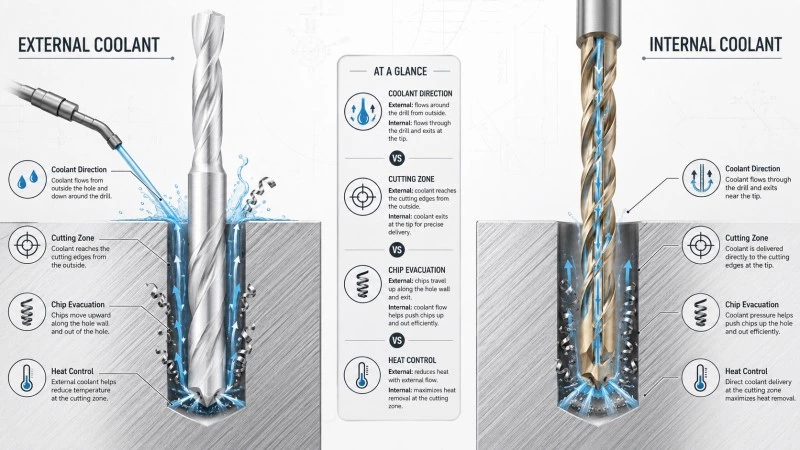
Coolant performs two closely connected functions during drilling: it helps control heat and assists chips in moving away from the cutting edges. When coolant cannot reach the drill point effectively, chips may remain inside the flutes, cutting temperature may rise and the drill may become less stable.
External and internal coolant can both produce reliable results when applied under suitable conditions. The purpose of this comparison is not to identify one method as universally better, but to determine which method provides sufficient cooling and chip evacuation for the actual drilling application.
What Is an External-Coolant Carbide Drill?
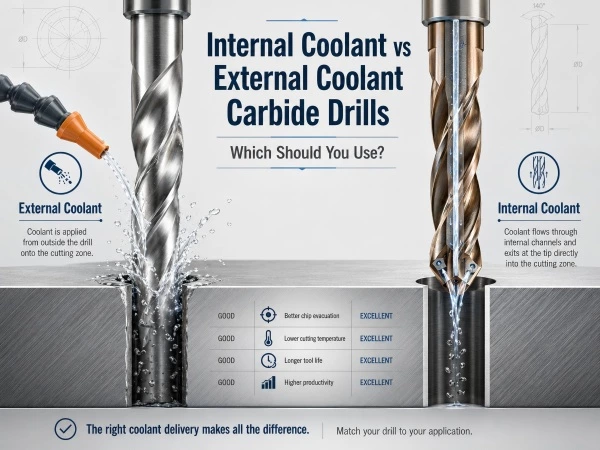
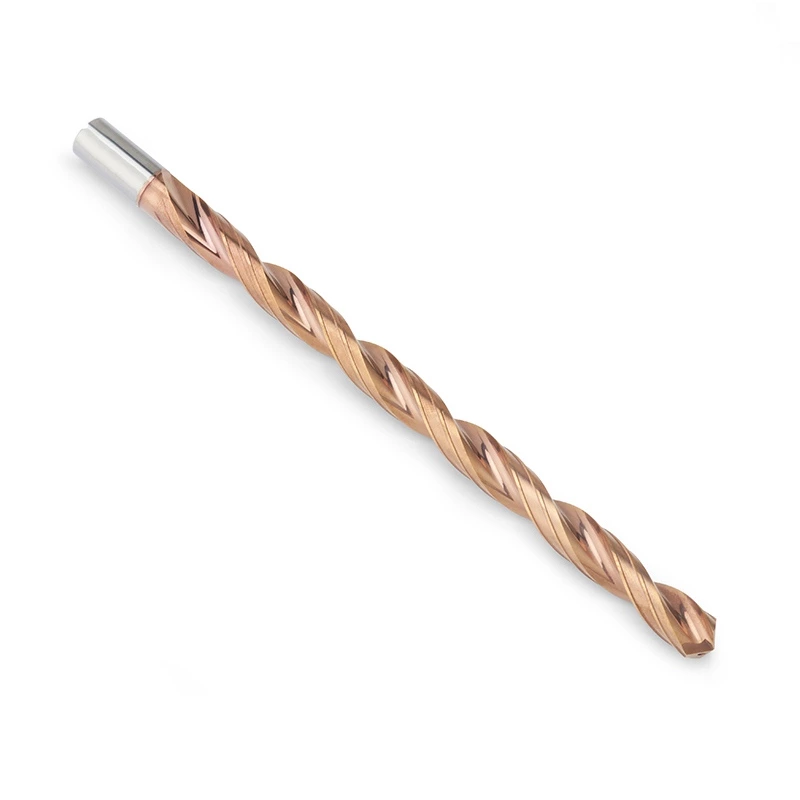
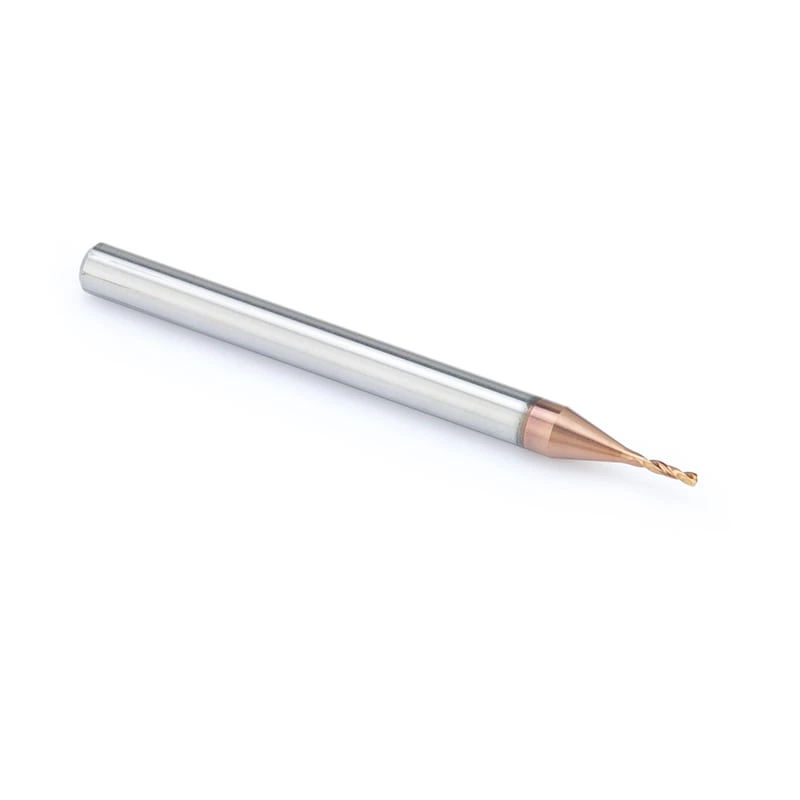
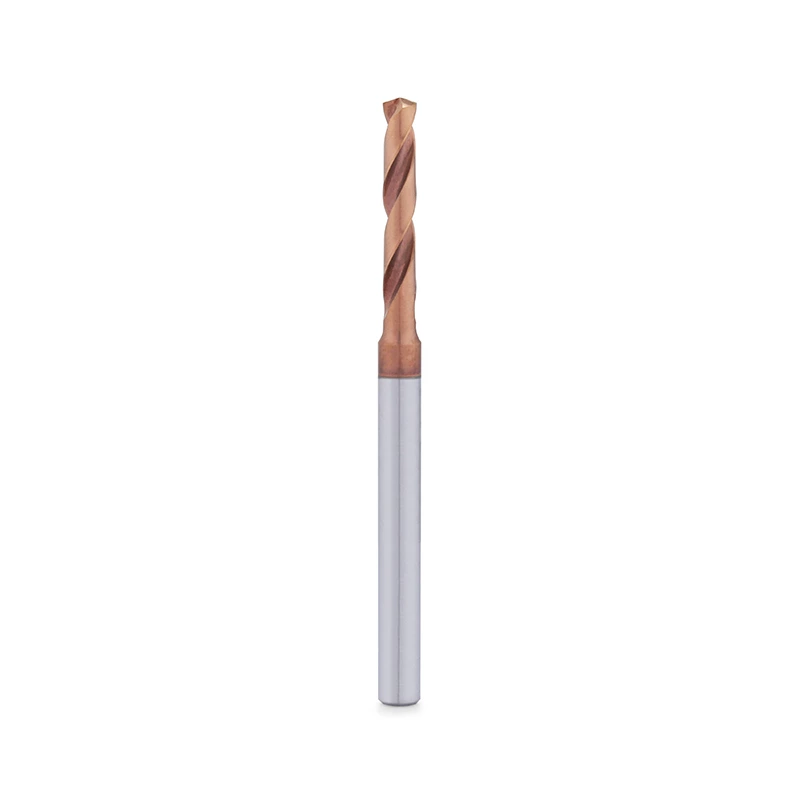
An external-coolant carbide drill does not depend on coolant channels running through the tool. Cutting fluid is delivered from one or more machine nozzles toward the drill and workpiece.
The coolant enters the cutting area from outside the hole and flows along the drill flutes as machining continues.
External cooling is commonly used for:
-
Shallow holes
-
Short and medium drilling cycles
-
Machines without through-spindle coolant
-
Applications with easy chip formation
-
Accessible drilling surfaces
-
General CNC machining
-
Lower-volume production
The structure of an external-coolant drill is relatively straightforward. Because no internal coolant channels are required, the tool can also be suitable for smaller machines or production environments where through-tool coolant is unavailable.
However, the effectiveness of external cooling decreases when the workpiece prevents the fluid from reaching the drill point.
As the drill moves deeper into the hole, the coolant must travel against the outgoing chips through a restricted space. If the chips do not leave the hole efficiently, they can interfere with coolant delivery and increase the risk of chip packing.
What Is an Internal-Coolant Carbide Drill?
An internal-coolant drill contains one or more coolant channels extending through the tool body.
Coolant enters through the toolholder and flows through these channels toward outlets near the drill point. It is therefore delivered close to the cutting edges rather than relying entirely on fluid entering from outside the hole.
Internal coolant can help:
-
Deliver fluid directly to the cutting zone
-
Remove chips from deeper holes
-
Control heat near the drill point
-
Reduce the risk of chip accumulation
-
Support stable drilling over longer depths
-
Improve process reliability in batch production
Internal-coolant drills are commonly used for:
-
Medium and deep holes
-
Long-chipping materials
-
Blind-hole drilling
-
High-volume CNC production
-
Stainless steel machining
-
Deep-hole steel drilling
-
Difficult-to-machine materials
-
Applications requiring predictable tool life
The presence of coolant channels does not guarantee good performance by itself. The machine, toolholder, filtration system, coolant flow and operating procedure must all support the tool.
Internal Coolant vs External Coolant: Main Differences
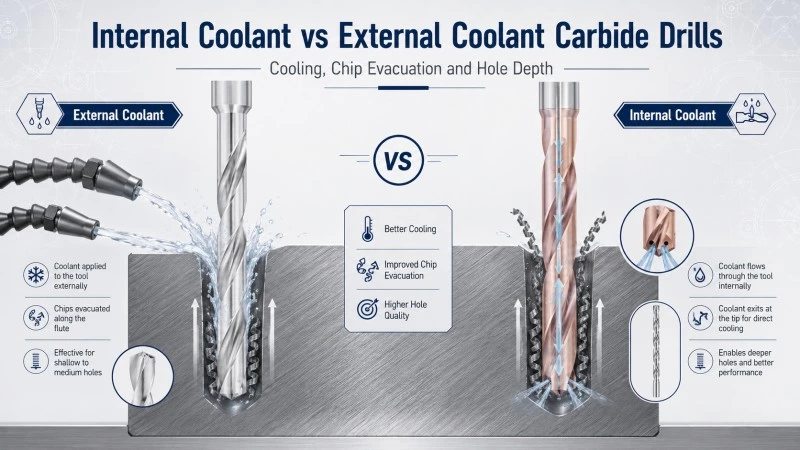
| Comparison factor | Internal-coolant drill | External-coolant drill |
|---|---|---|
| Coolant delivery | Through channels inside the drill | From nozzles outside the tool |
| Access to drill point | More direct | Becomes more difficult as depth increases |
| Shallow-hole capability | Suitable | Often sufficient |
| Deep-hole capability | Generally more suitable | More limited |
| Chip-evacuation support | Stronger in demanding conditions | Depends heavily on flute access and nozzle position |
| Machine requirements | Through-spindle or through-holder coolant | Standard external coolant system |
| Toolholder requirements | Coolant-compatible and properly sealed | Conventional precision holder may be used |
| Filtration sensitivity | Higher | Lower |
| Tool complexity | Higher | Lower |
| Typical applications | Deep holes and continuous production | Shallow holes and general machining |
The table provides a general comparison. Drill geometry, workpiece material, diameter, cutting parameters and machine conditions can change the result.
Why Coolant Delivery Matters During Drilling
Unlike an open milling operation, drilling takes place inside a progressively enclosed space.
The cutting edges are located at the bottom of the hole, while the chips must travel upward through the flutes. Coolant must reach the same restricted area while chips are moving in the opposite direction.
This makes coolant delivery closely connected to chip evacuation.
An effective cooling system should help:
-
Reach the cutting edges
-
Reduce excessive heat
-
Lubricate the contact area
-
Move chips into the flutes
-
Support chip transport out of the hole
-
Prevent chips from being cut repeatedly
When chips remain inside the hole, they may rub against the drill, workpiece or newly machined hole wall.
Possible results include:
-
Increased torque
-
Rising cutting temperature
-
Scratched hole walls
-
Unstable hole diameter
-
Damage to the margins
-
Cutting-edge chipping
-
Sudden drill breakage
The drill flute and cutting geometry still determine how chips are formed. Coolant supports chip movement, but it cannot completely correct unsuitable geometry or incorrect cutting parameters.
Selecting Coolant by Hole Depth
Hole depth is one of the most important factors when choosing between internal and external coolant.
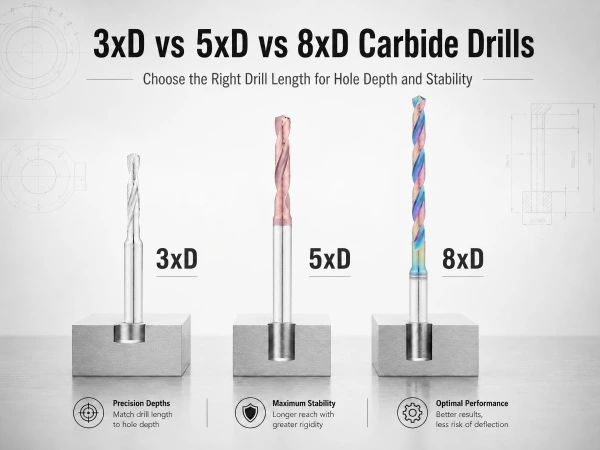
The required drilling depth is commonly expressed as a multiple of drill diameter, such as 3xD, 5xD or 8xD.
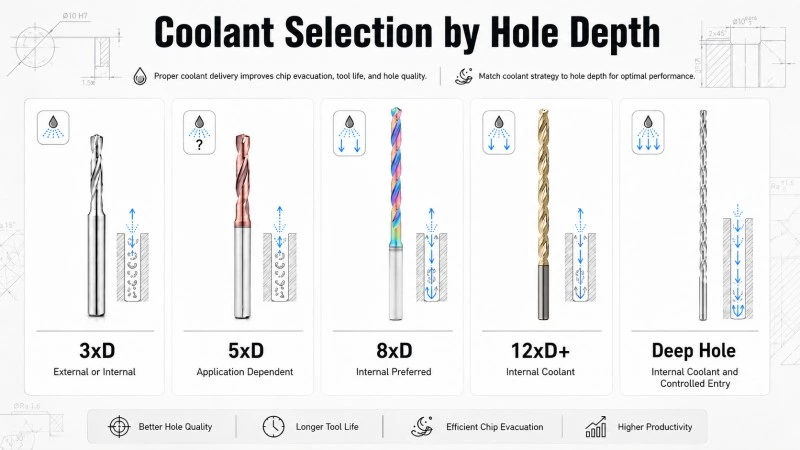
Up to Approximately 3xD
External coolant is often practical for relatively shallow holes when:
-
The cutting zone is accessible
-
Chips form correctly
-
The material does not create severe adhesion
-
The coolant nozzles are positioned accurately
-
The drill flutes remain open
-
The machining cycle is stable
Internal coolant can still be used at 3xD, particularly in high-volume production or materials that generate difficult chips.
The selection should therefore be based on process requirements rather than assuming that all short drills must use external coolant.
Around 5xD
At approximately 5xD, both cooling methods may be possible.
External coolant may remain effective when:
-
Chip formation is short and controlled
-
Coolant access is good
-
The drill diameter provides sufficient flute space
-
The workpiece material is not highly adhesive
-
Production requirements are moderate
Internal coolant generally provides greater process security when:
-
Chips are long
-
The hole is blind
-
Cutting temperature is high
-
Tool life must remain consistent
-
Production runs are long
-
Coolant access from outside is restricted
The machine capability and workpiece material should be evaluated before choosing the drill.
Around 8xD
At approximately 8xD, internal coolant becomes increasingly valuable.
The longer chip-travel distance makes the drilling process more sensitive to:
-
Chip packing
-
Inadequate fluid flow
-
Excessive runout
-
Unstable entry
-
Incorrect feed
-
Insufficient flute space
-
Repeated chip recutting
External cooling may work in selected applications, but it generally provides less process margin as the drill point moves farther from the hole entrance.
For continuous CNC production, an internal-coolant drill is often the more reliable starting point.
12xD and Deeper
Deep-hole drilling normally requires a coordinated process involving:
-
Internal coolant
-
Suitable coolant pressure and flow
-
A stable spindle
-
A precision toolholder
-
Low runout
-
Correct drill entry
-
A suitable pilot hole when required
-
Controlled cutting parameters
-
Reliable coolant filtration
The drill should be used according to the recommended entry, drilling and retraction procedure for its specific design.
Simply installing a longer drill without changing the process can lead to poor hole straightness, chip blockage or tool failure.
Coolant Selection by Workpiece Material
Hole depth is not the only consideration. Different workpiece materials create different chips, cutting temperatures and lubrication requirements.
Steel
Steel drilling conditions vary widely according to alloy grade, hardness and heat treatment.
In general steel applications, external coolant may be suitable for shallow holes when chips break correctly and the fluid can reach the cutting zone.
Internal coolant becomes more useful when:
-
The hole is deeper
-
Production quantities are high
-
Chips remain inside the flutes
-
Tool life varies between parts
-
The operation must run with limited operator intervention
The drill geometry and coating must also match the steel grade.
Stainless Steel
Stainless steel can produce long chips, high cutting heat and material adhesion. It may also work-harden when the drill rubs instead of cutting efficiently.
Internal coolant is often beneficial because it delivers fluid closer to the drill point and assists chip removal from inside the hole.
Important considerations include:
-
Correct feed
-
Stable chip formation
-
Sufficient coolant flow
-
Suitable lubrication
-
Low tool runout
-
Controlled cutting temperature
External coolant may still work for shallow stainless steel holes, but the nozzles must be positioned carefully and the chips must leave the hole freely.
When stainless steel chips collect around the drill or remain inside the flutes, changing only the coolant method may not be enough. The feed, speed and drill geometry should also be reviewed.
Aluminum
Aluminum generally produces less cutting heat than many steels, but it can adhere to the cutting edges and flute surfaces.
The coolant system should help reduce adhesion and move the relatively soft chips out of the hole.
External coolant can be effective for shallow aluminum drilling when:
-
The drill has suitable sharp geometry
-
The flute surface is smooth
-
Lubrication is adequate
-
Chips do not become compacted
-
The coolant stream reaches the drill point
Internal coolant can provide advantages in:
-
Deeper aluminum holes
-
High-speed production
-
Small-diameter holes
-
Blind holes
-
Applications with recurring chip blockage
Coolant filtration remains important because small internal channels can be affected by contamination.
Cast Iron
Many cast irons form shorter chips than steel or stainless steel. This can reduce some chip-evacuation difficulties, although abrasive wear remains a concern.
External coolant, air or other machining strategies may be considered depending on:
-
Cast iron grade
-
Machine design
-
Dust-control requirements
-
Hole depth
-
Drill design
-
Surface condition
-
Production environment
The cooling method should be selected according to the complete process. Some cast-iron applications may not require the same lubrication approach as stainless steel drilling.
Titanium and High-Temperature Alloys
Titanium alloys and heat-resistant materials concentrate heat near the cutting zone and can place high loads on the drill edges.
Internal coolant can help deliver fluid close to the drill point, particularly in medium and deep holes.
However, stable performance also requires:
-
Controlled cutting speed
-
Sufficient feed
-
Low runout
-
Reliable coolant supply
-
Suitable drill geometry
-
Short, manageable chips
-
A rigid setup
Inadequate flow, incorrect parameters or chip packing can cause rapid tool wear even when an internal-coolant drill is used.
Through Holes vs Blind Holes
The hole type also affects coolant and chip behavior.
Through Holes
In a through hole, the drill eventually breaks through the opposite side of the component.
Possible concerns include:
-
Change in cutting load during breakthrough
-
Exit burr formation
-
Reduced workpiece support near the exit
-
Coolant loss after breakthrough
-
Protection of fixtures behind the component
External coolant may be sufficient for shallow through holes. For deeper through holes, internal coolant can improve chip transport before breakthrough occurs.
Blind Holes
A blind hole ends inside the workpiece.
Chips cannot leave from the bottom, so they must travel back through the flutes to the entrance.
This makes blind holes more sensitive to:
-
Chip accumulation
-
Coolant access
-
Hole depth
-
Bottom geometry
-
Tool retraction
-
Unstable cutting conditions
Internal coolant often provides greater process security for medium and deep blind holes because coolant is delivered near the area where chips are generated.
Machine Requirements for Internal Coolant
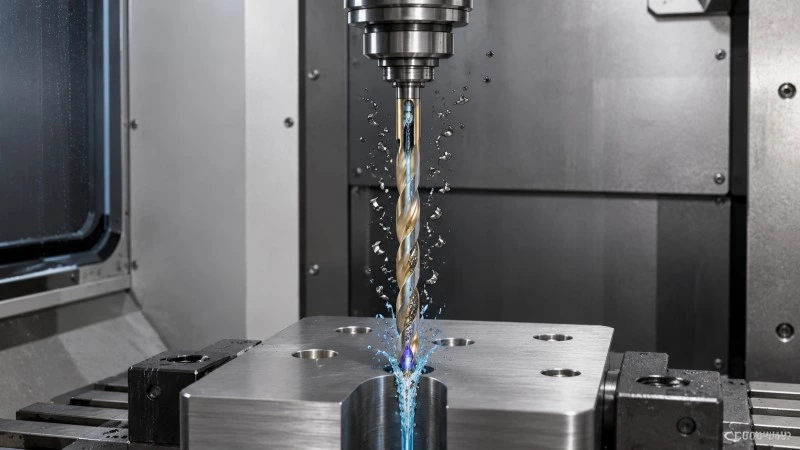
Before selecting an internal-coolant drill, confirm that the machine and toolholding system can supply coolant effectively.
Important factors include:
-
Through-spindle coolant capability
-
Coolant-compatible toolholders
-
Reliable sealing
-
Adequate coolant flow
-
Suitable system pressure
-
Effective filtration
-
Clean coolant channels
-
Stable coolant concentration
-
Correct toolholder assembly
Pressure and flow are related but are not identical.
High pressure without sufficient flow may not transport chips effectively. At the same time, increasing flow without controlling filtration can allow particles to enter and block small coolant channels.
The required coolant condition depends on:
-
Drill diameter
-
Coolant-channel size
-
Hole depth
-
Workpiece material
-
Chip volume
-
Cutting parameters
Very small drills are especially sensitive to channel blockage. Coolant cleanliness and filtration should therefore be reviewed before production begins.
How to Position External Coolant Nozzles
The effectiveness of external cooling depends heavily on nozzle position.
The coolant stream should reach the area where the drill enters the hole and should be aligned as closely as practical with the tool axis.
Poor nozzle positioning may cause the coolant to strike the side of the toolholder or workpiece without reaching the drill point.
Useful practices include:
-
Positioning the nozzle close to the drilling zone
-
Directing the stream toward the drill axis
-
Using more than one nozzle when necessary
-
Confirming that the stream remains stable at operating speed
-
Preventing chips from blocking the coolant path
-
Rechecking nozzle position after tool changes
A large visible coolant stream does not automatically mean that enough fluid reaches the cutting edges.
The coolant path should be observed under actual machining conditions whenever possible.
Common Signs of Insufficient Cooling or Chip Evacuation
A drilling process may require coolant or parameter adjustment when the following symptoms appear:
-
Chips remain wrapped around the drill
-
Chips collect inside the flutes
-
Cutting noise increases during depth
-
Torque or spindle load rises
-
Hole walls become scratched
-
Burr formation increases
-
Drill margins show abnormal wear
-
Cutting edges chip unexpectedly
-
Tool life varies significantly
-
Hole diameter changes during the batch
-
Chips show excessive heat discoloration
-
Coolant does not exit the hole consistently
These symptoms do not always indicate a coolant problem alone.
The following factors should also be checked:
-
Cutting speed
-
Feed rate
-
Tool runout
-
Drill wear
-
Flute condition
-
Drill length
-
Workpiece clamping
-
Pilot-hole accuracy
-
Coolant concentration
Changing one variable at a time makes it easier to identify the true cause of the problem.
Common Coolant-Selection Mistakes
Assuming Internal Coolant Solves Every Problem
Internal coolant improves fluid delivery, but it cannot correct excessive runout, poor geometry, incorrect parameters or unstable clamping.
Choosing a Long Drill When a Shorter Tool Is Sufficient
A longer drill has lower overall rigidity and creates a longer chip-travel path.
The shortest drill capable of reaching the required depth should normally be selected.
Ignoring Coolant Flow
Machine pressure alone does not confirm that sufficient coolant reaches the cutting zone.
Flow, channel size, tool diameter and filtration must also be considered.
Using Poorly Filtered Coolant
Particles can restrict or block small internal coolant channels, especially in micro and small-diameter drills.
Positioning External Nozzles Too Far Away
A nozzle may produce a large amount of coolant while still failing to direct it into the hole.
Reducing Feed Excessively
Very low feed can cause rubbing rather than stable chip formation, particularly in materials that work-harden.
Treating Every Material the Same
Steel, stainless steel, aluminum, cast iron and titanium do not produce identical chip and heat conditions.
The cooling method must be matched to the workpiece material and drill geometry.
When to Choose an External-Coolant Drill
External coolant is often a practical choice when:
-
The hole is shallow
-
The cutting zone is accessible
-
Chips form and evacuate easily
-
The machine does not support through-tool coolant
-
Production volume is limited
-
The operation uses a short, rigid drill
-
Coolant nozzles can be positioned accurately
-
The workpiece material does not create severe chip-packing problems
External coolant can provide an economical and reliable solution when the application does not require the additional process security of internal delivery.
When to Choose an Internal-Coolant Drill
Internal coolant is often preferred when:
-
The hole is medium or deep
-
The workpiece produces long chips
-
The hole is blind
-
Cutting temperature is difficult to control
-
Production volume is high
-
Tool life must remain predictable
-
The process runs automatically
-
External coolant cannot reach the drill point
-
Chip packing has caused previous failures
-
The operation involves stainless steel, titanium or another demanding material
The final selection must still account for machine capability, coolant flow, filtration and the required operating procedure.
A Practical Selection Checklist
Before choosing the cooling method, collect the following information:
-
Workpiece material and hardness
-
Hole diameter
-
Hole depth
-
Through hole or blind hole
-
Drill length-to-diameter ratio
-
Machine model
-
Through-spindle coolant availability
-
Coolant pressure and flow capability
-
Coolant filtration
-
Toolholder type
-
Current cutting speed and feed
-
Chip shape
-
Current tool life
-
Existing drilling problem
-
Production quantity
This information helps determine whether external coolant is sufficient or whether an internal-coolant drill will provide a more stable process.
Frequently Asked Questions
Is internal coolant always better than external coolant?
No. Internal coolant provides more direct delivery to the drill point, but external coolant can be fully suitable for shallow holes and applications with good chip evacuation.
At what hole depth should internal coolant be used?
There is no single depth limit for every application. Material, drill diameter, chip shape and machine capability all matter. Internal coolant becomes increasingly valuable as hole depth increases, particularly around 5xD, 8xD and deeper applications.
Can an internal-coolant drill be used for a 3xD hole?
Yes. Internal coolant can support stable production even in shallow holes, particularly for high-volume machining or difficult materials. It is not limited to deep-hole drilling.
Can an external-coolant drill be used at 5xD?
It may be possible when chip formation is controlled and coolant reaches the cutting zone effectively. Internal coolant generally provides greater process security for difficult materials, blind holes and continuous production.
Does higher coolant pressure always improve tool life?
Not necessarily. The cooling system must provide an effective combination of pressure, flow, filtration and delivery. Excessive focus on pressure alone can overlook insufficient flow or blocked channels.
Why does an internal-coolant drill still experience chip blockage?
Possible causes include incorrect feed, unsuitable drill geometry, inadequate coolant flow, poor filtration, excessive runout, worn cutting edges or an incorrect deep-hole drilling procedure.
Is peck drilling required with an internal-coolant drill?
It depends on the drill design, hole depth, workpiece material and manufacturer’s operating instructions. Some drills are designed for continuous drilling, while other applications may require a controlled drilling strategy.
Can external coolant be used for stainless steel?
Yes, particularly for shallow holes with effective coolant access. Internal coolant is often more reliable as hole depth and chip-evacuation difficulty increase.
Conclusion
Internal and external coolant are both valid methods for carbide drilling, but they serve different operating conditions.
External coolant is often sufficient for shallow holes, accessible cutting zones and applications with manageable chips. It also allows carbide drilling on machines without through-spindle coolant.
Internal coolant delivers fluid closer to the drill point and generally provides greater support for medium and deep holes, blind holes, long-chipping materials and continuous CNC production.
The correct decision should be based on:
-
Hole depth
-
Workpiece material
-
Chip behavior
-
Machine capability
-
Coolant flow and filtration
-
Toolholder condition
-
Production quantity
-
Required process reliability
A successful drilling process depends on the complete system. Coolant method, drill geometry, cutting parameters, machine rigidity and chip evacuation must work together.
Discuss Your Carbide Drilling Application
Landun CNC Tool supplies internal-coolant and external-coolant solid carbide drills for different materials and drilling depths, including standard, micro, deep-hole and custom drill structures.
Customers can provide the workpiece material, hole diameter, hole depth, machine information, coolant capability and current drilling problem for technical evaluation.
 Need a Custom Tool solution?