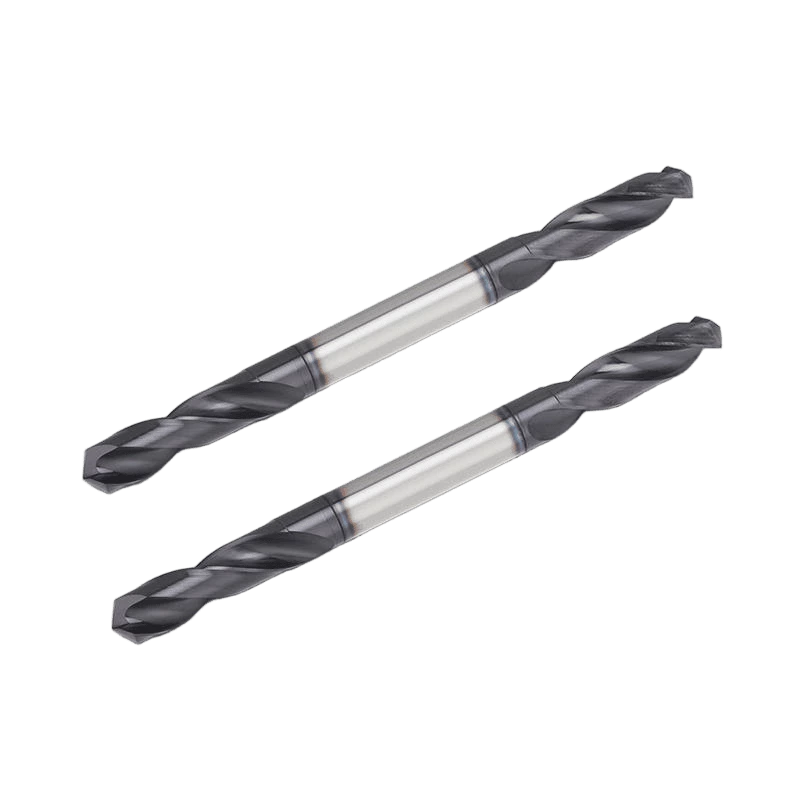
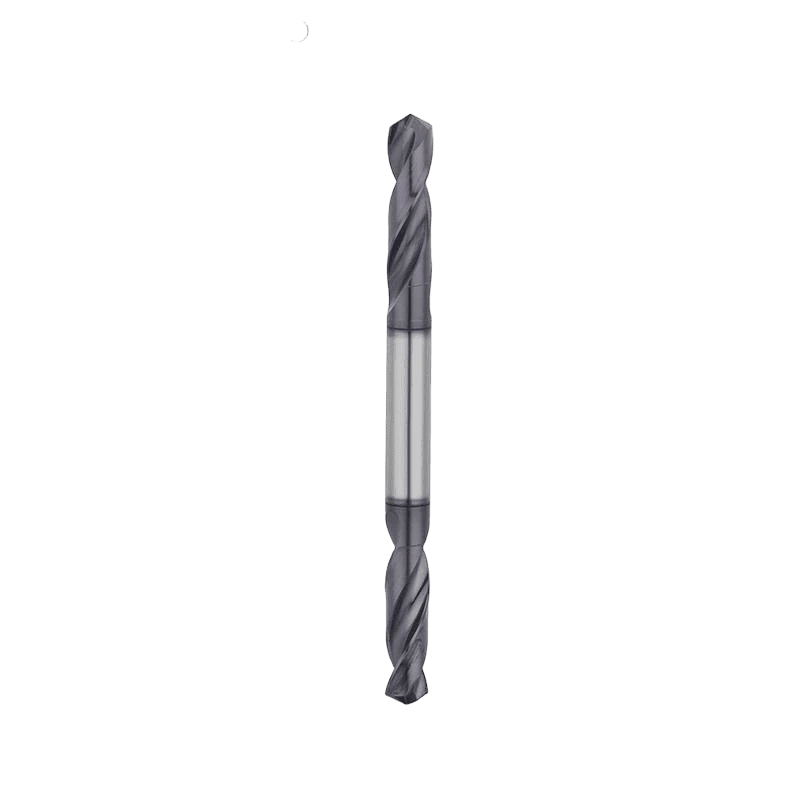
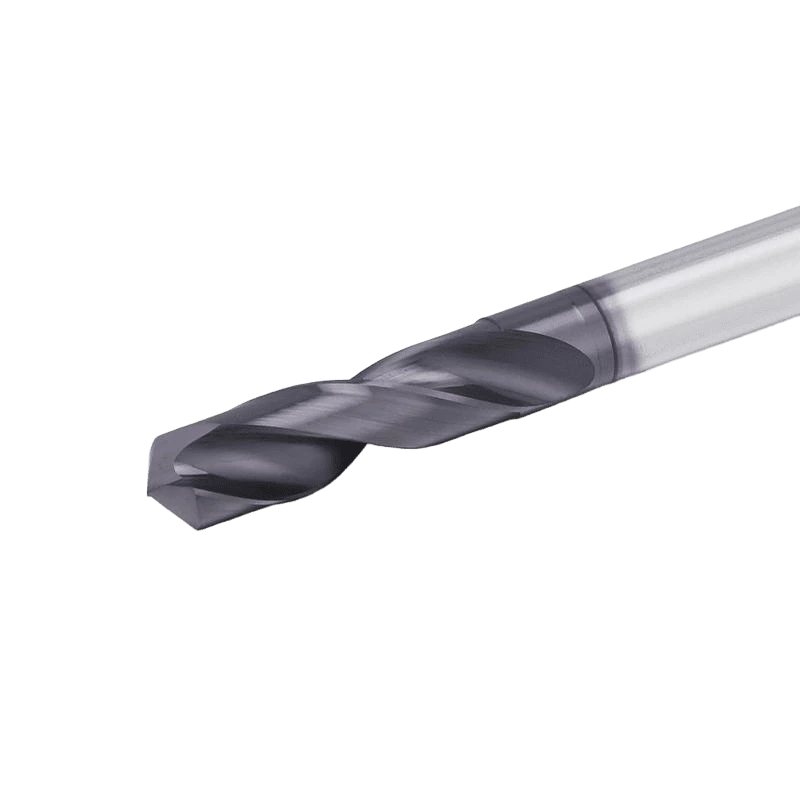
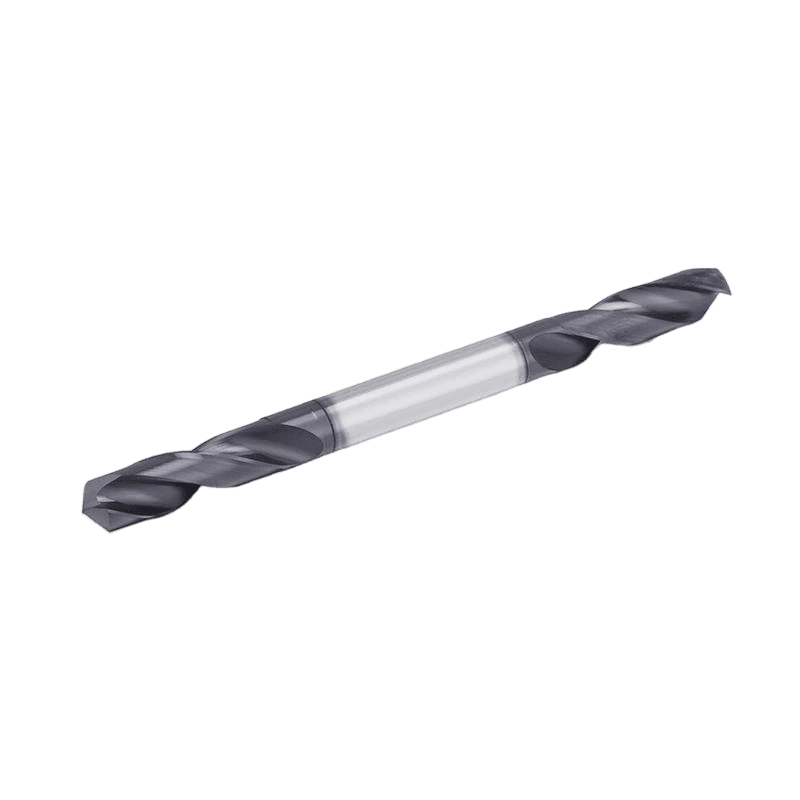
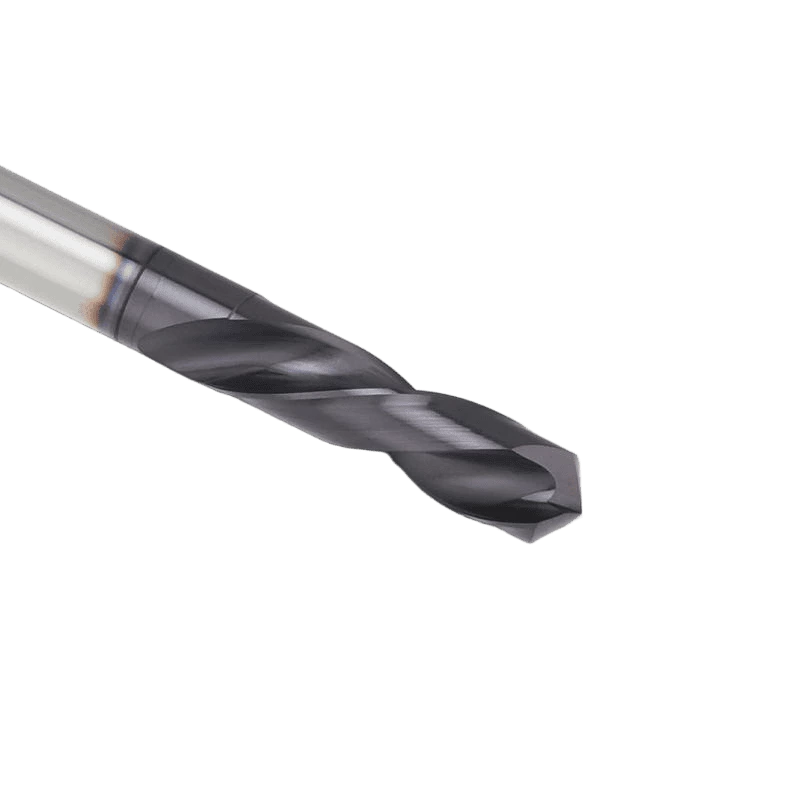
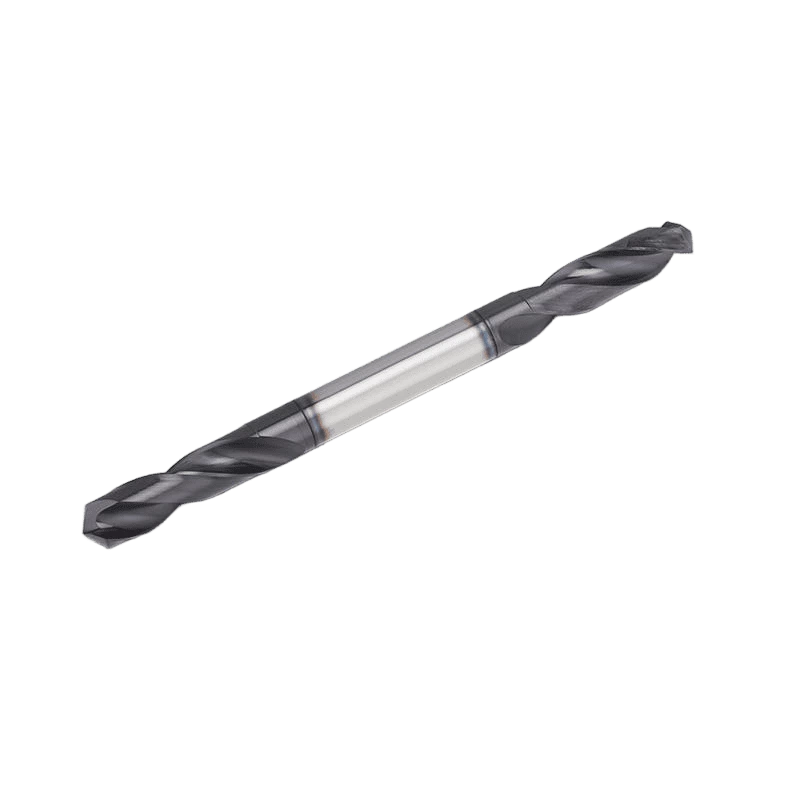
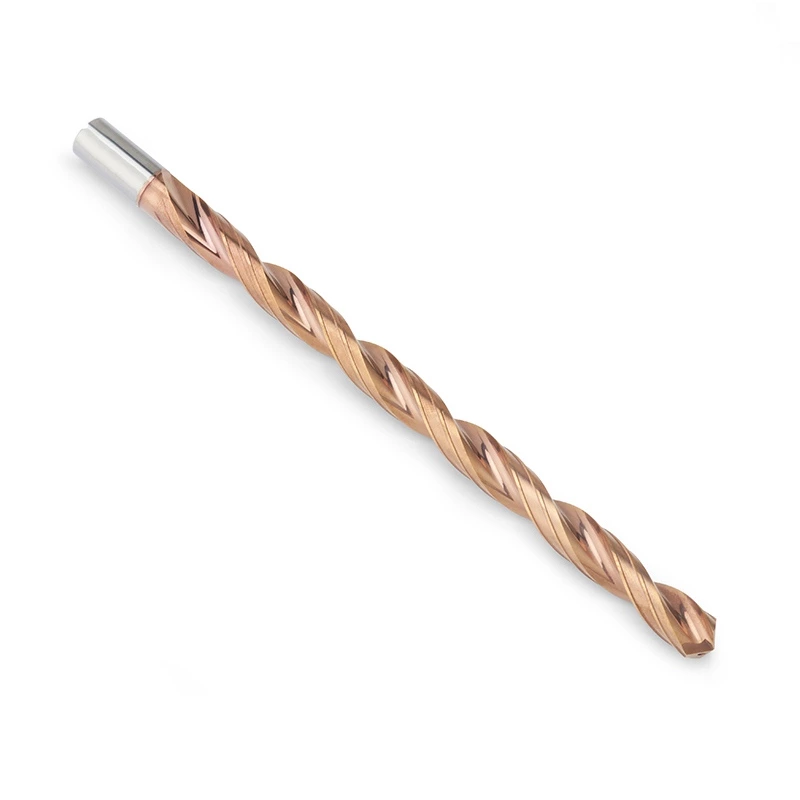
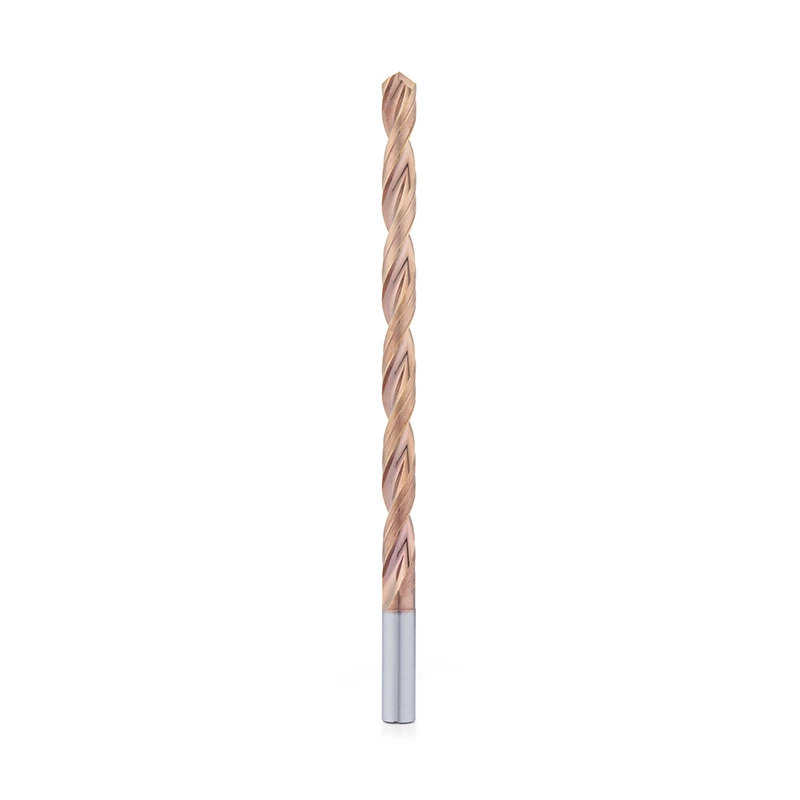
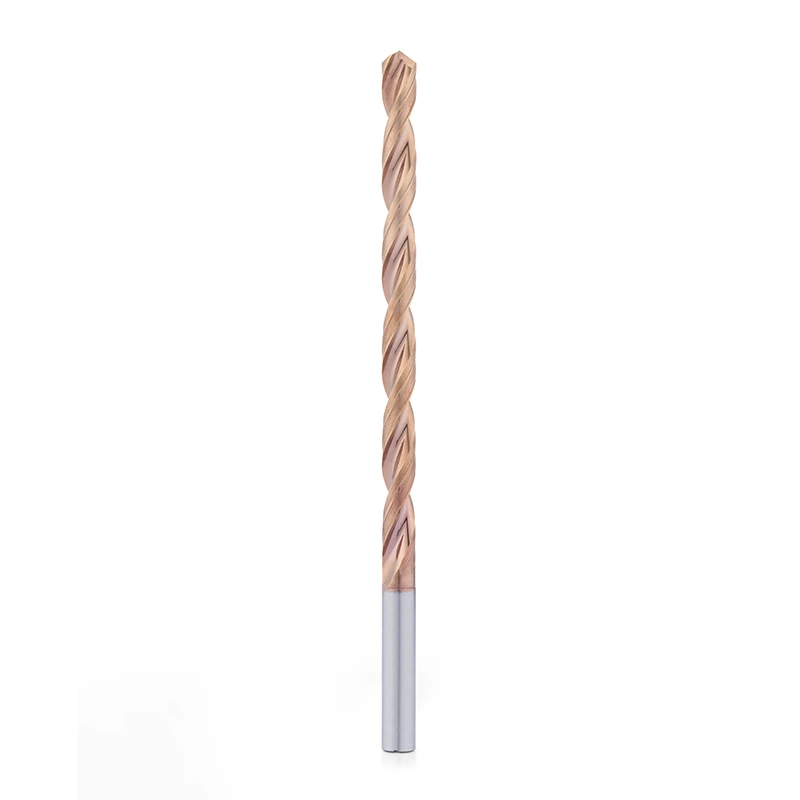
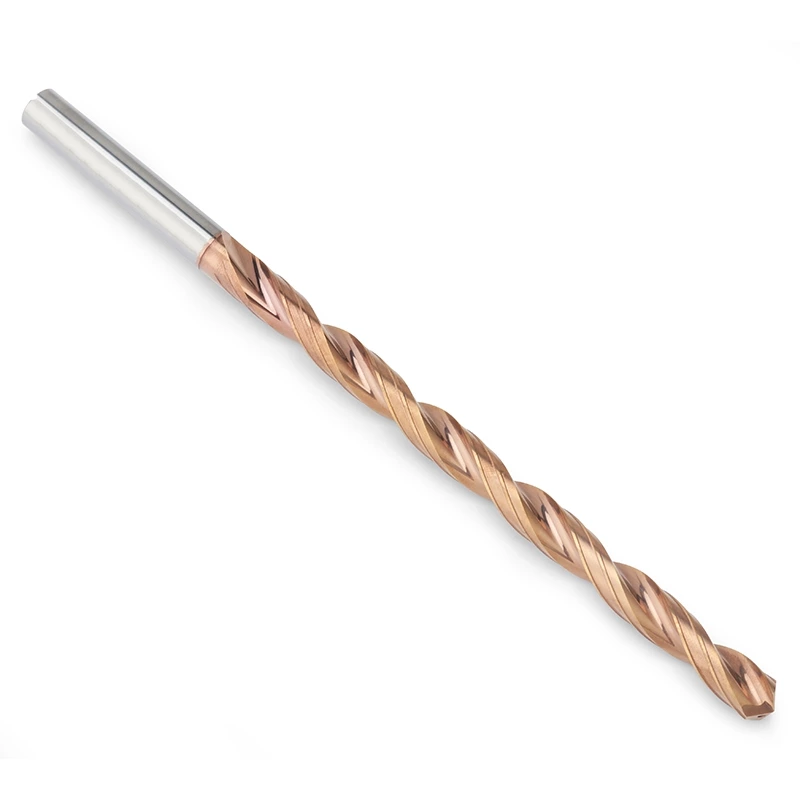
The double-ended carbide drill is designed with a cutting section at both ends of a common solid carbide body. Only one cutting end is used at a time. After the first end reaches its wear limit, the tool can be removed, reversed, re-clamped through the central shank section, and used from the opposite end.
Compared with a conventional single-ended carbide drill, the double-ended design provides two usable cutting ends within one tool. This helps improve carbide material utilization, reduce the number of individual tools required for production, lower tooling inventory, and support more economical batch machining.
Both cutting ends are precision-ground to maintain consistent diameter, point geometry, flute shape, and cutting-edge quality. A stable central cylindrical clamping section allows the drill to be held securely while keeping the unused cutting end clear of the holder and machine components.
The product is particularly suitable for short-hole drilling, shallow blind holes, through holes in thin components, positioning holes, and repetitive production applications where tool consumption and replacement frequency are important.
This double-ended drill is manufactured from imported MG grade 0.8 μm tungsten carbide with 10% cobalt content. German Walter 5-axis grinding, controlled edge preparation, Walter Helicheck Plus measurement, and 300x magnification inspection help maintain geometric consistency between both cutting ends.
| Item | Description | Item | Description |
|---|---|---|---|
| Product Name | Double-Ended Carbide Drill | Alternative Name | Double Ended Carbide Drill Bit / Two-Ended Solid Carbide Drill |
| Drill Type | Solid Carbide Double-Ended Drill | Cutting Ends | Two independently usable cutting ends |
| Standard Configuration | Matching diameter and geometry on both ends | Carbide Material | Tungsten Carbide |
| Point Geometry | Selected according to workpiece material and hole requirements | Flute Design | Two-flute geometry or application-specific configuration |
| Inspection Equipment | German Walter Helicheck Plus | Workpiece Material | Steel, stainless steel, cast iron, aluminum, titanium alloy, and selected non-ferrous materials |
| Coolant Type | Internal Coolant / External Coolant Available | Main Application | Short holes, shallow blind holes, through holes, positioning holes, and repetitive batch drilling |
| Service | Regrinding and Customization Available | Size Availability | Standard and customized diameters available |
Key Features
The drill provides one cutting section at each end of the carbide body.
After the first cutting end becomes worn, the tool can be reversed and re-clamped so the second end can continue production, improving the utilization of the carbide blank.
Both ends are ground and inspected for diameter, point geometry, flute profile, and cutting-edge consistency.
Consistent dual-end geometry helps reduce differences in hole size, entry performance, and cutting load after the tool is reversed.
A precision-ground cylindrical section is positioned between the two cutting ends.
The central shank provides the gripping area required for secure clamping while keeping the active and inactive cutting sections outside the holder.
The drill is manufactured from imported MG grade 0.8 μm tungsten carbide with 10% cobalt content.
The fine carbide structure supports rigidity, cutting-edge strength, dimensional stability, and repeatable drilling performance on both ends of the tool.
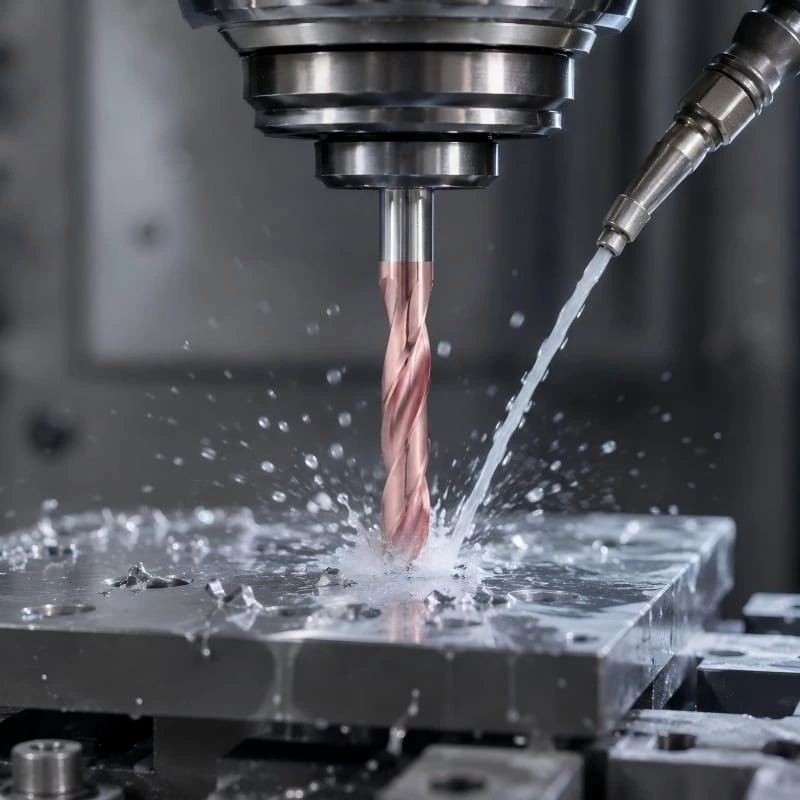
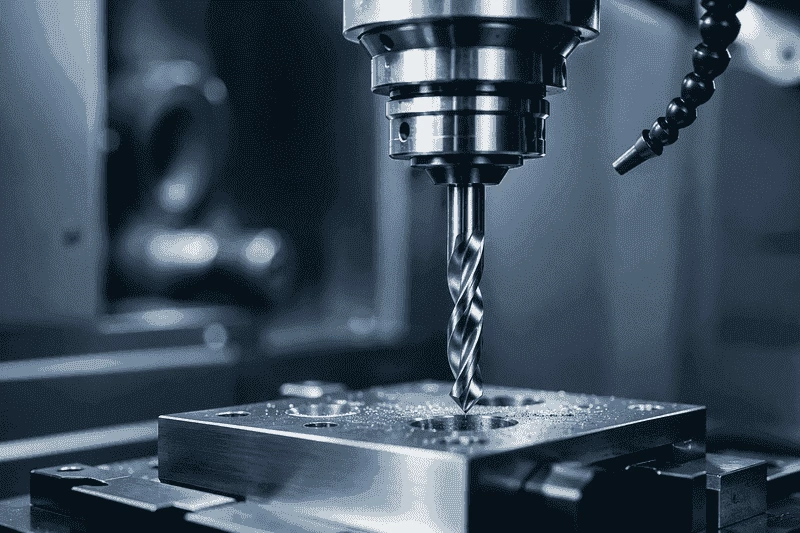
Double-ended carbide drills are suitable for CNC machining centers, drilling machines, automatic lathes, transfer lines, and high-volume manufacturing. They are especially useful for short-hole applications where tool consumption, tooling cost, compact storage, and production continuity are important.
Send us your material and hole requirements. Our team will recommend the right drill solution.
Landun CNC Tool is a carbide drill manufacturer focused on precision solid carbide drills and custom carbide drill solutions, supported by advanced grinding, strict inspection, and consistent edge preparation.
Production Facility
Geometry Accuracy Control
Edge Inspection Magnification
Edge Passivation Control
Our carbide drills are ground on German WALTER 5-axis grinding machines for sharp cutting edges, stable accuracy, and smooth drilling performance.
We use WALTER HELICHECK PLUS for contour inspection, keeping profile and radius control within 3 μm for reliable geometric precision.
Each carbide drill is inspected at 300x magnification to check edge quality and avoid chipping or saw-tooth defects before shipment.
Manual drill point honing and automatic rubber-bonded diamond abrasive polishing help improve tool life and control edge consistency within ±0.003 mm.
Common Questions
A double-ended carbide drill is a solid carbide tool with a usable drilling section at both ends. One end is used at a time, and the tool can be reversed after the first end becomes worn.
The main advantage is improved tool utilization. Two usable cutting ends are provided in one tool, helping reduce the number of separate drills required and lower tooling cost in batch production.
No. Only one cutting end is used at a time. The opposite end remains outside the holder until the tool is reversed and re-clamped.
Yes. The standard configuration normally uses the same diameter, flute length, point geometry, and coating on both ends.
Yes, selected different-diameter configurations can be customized. The design must be reviewed for central clamping length, holder clearance, rigidity, balance, and machine safety.
Yes. Different point angles, cutting lengths, or edge preparations may be possible, subject to tool dimensions and holder requirements.
Double-ended drills are generally more suitable for short or shallow holes because the central clamping section and two cutting ends limit the available flute length. Deep-hole requirements should be reviewed separately.
A precision collet chuck, hydraulic chuck, or other suitable high-accuracy holder may be used when the central shank diameter and length are compatible. The holder must not contact or damage either flute section.
Yes. Diameter, flute length, point geometry, central shank diameter, clamping length, overall length, coating, and both cutting-end configurations can be customized.
After the first end reaches its wear limit, stop the machine, remove the tool, clean the central shank and holder, reverse the drill, re-clamp it to the specified length, and confirm runout before restarting production.
Explore Our Products
We use cookies to collect information about how you use this site. We use this information to make the website work as well as possible and improve our services.more details