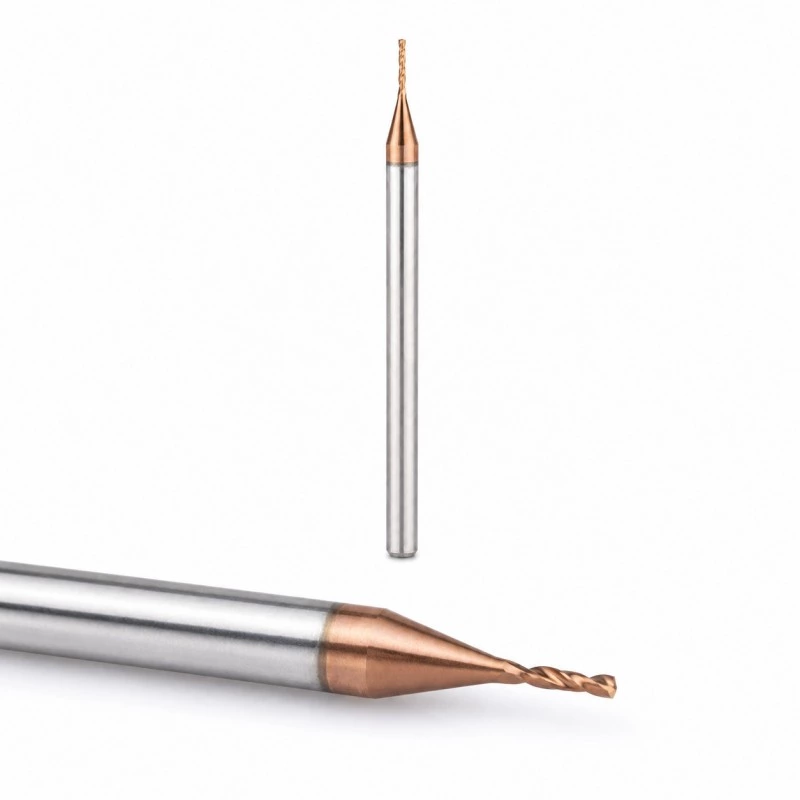
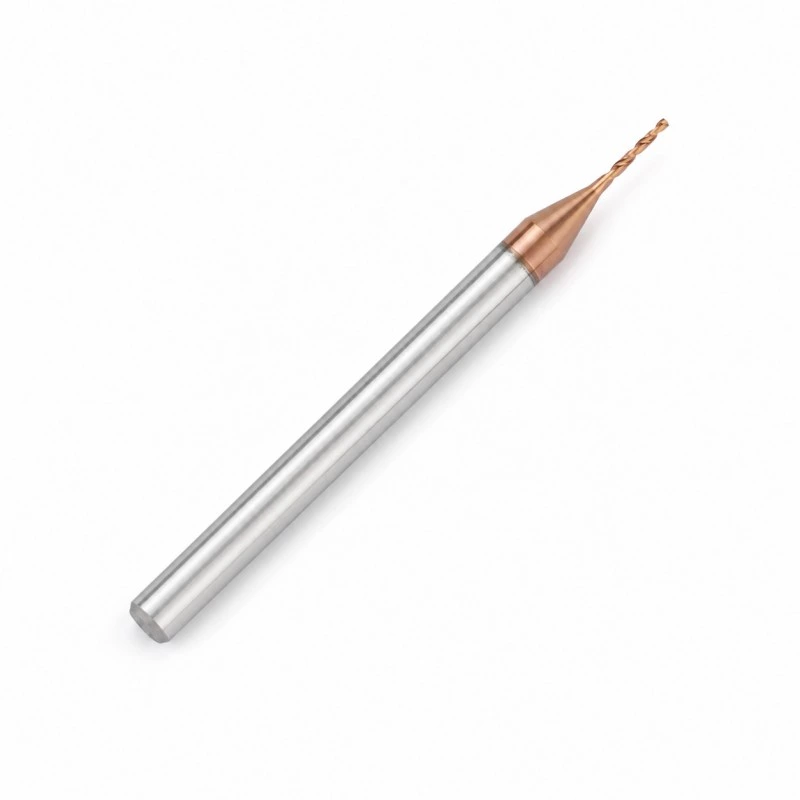
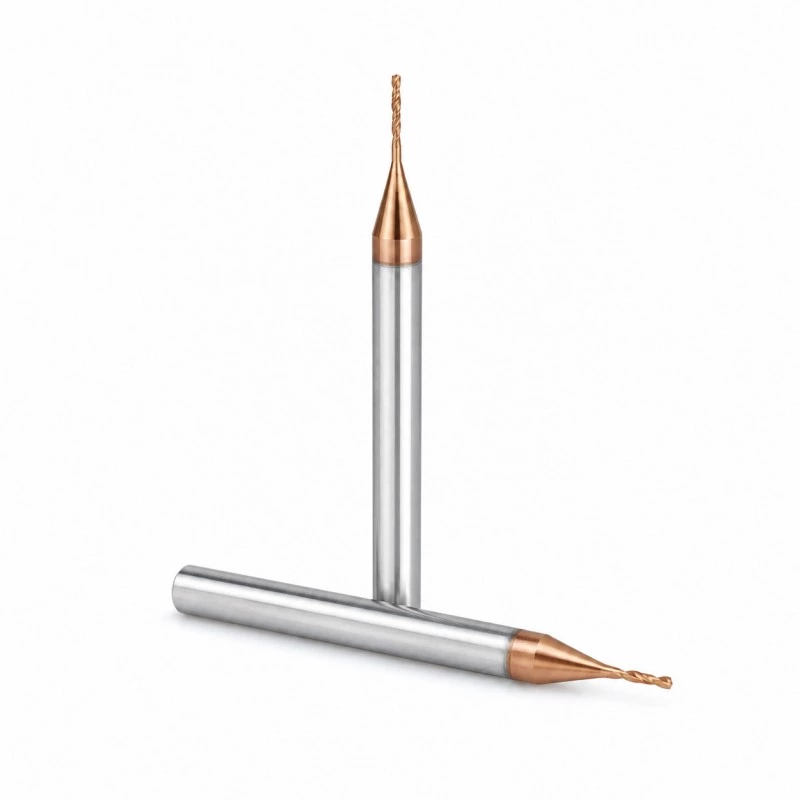
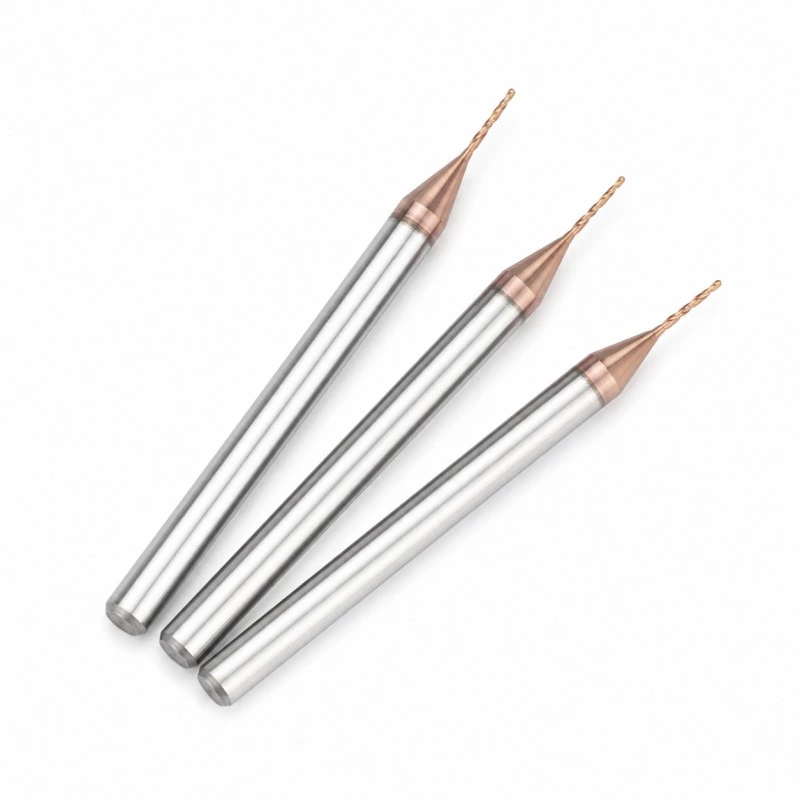
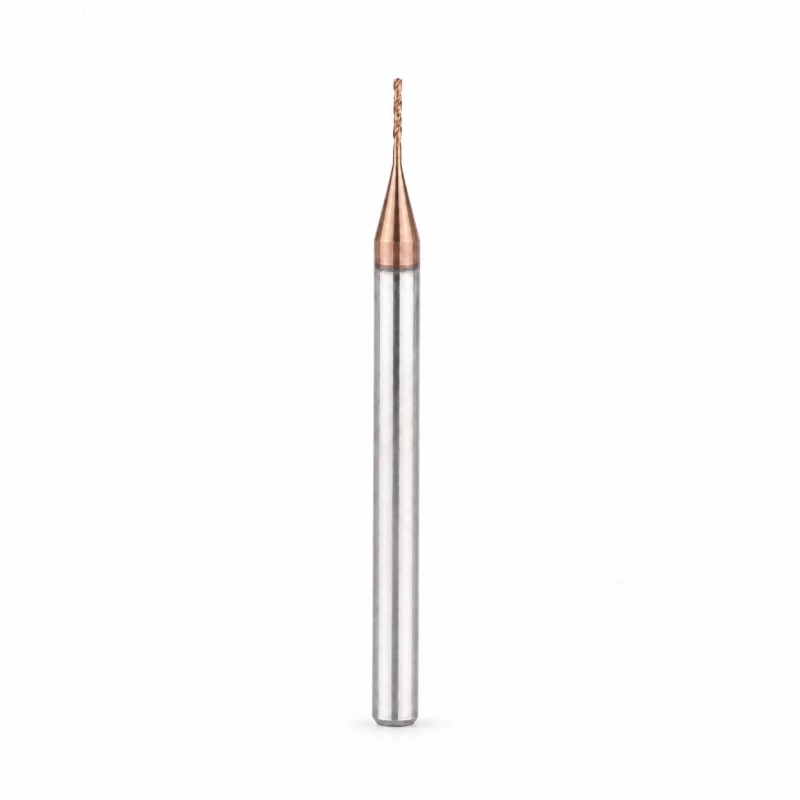
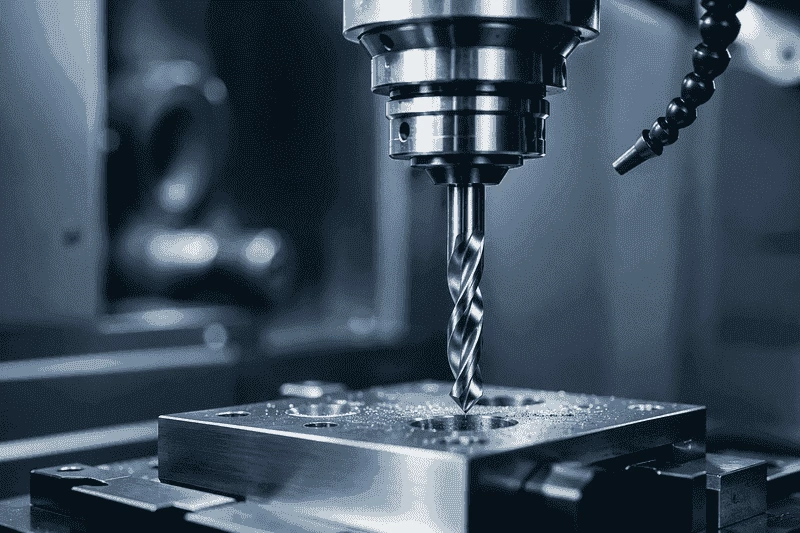
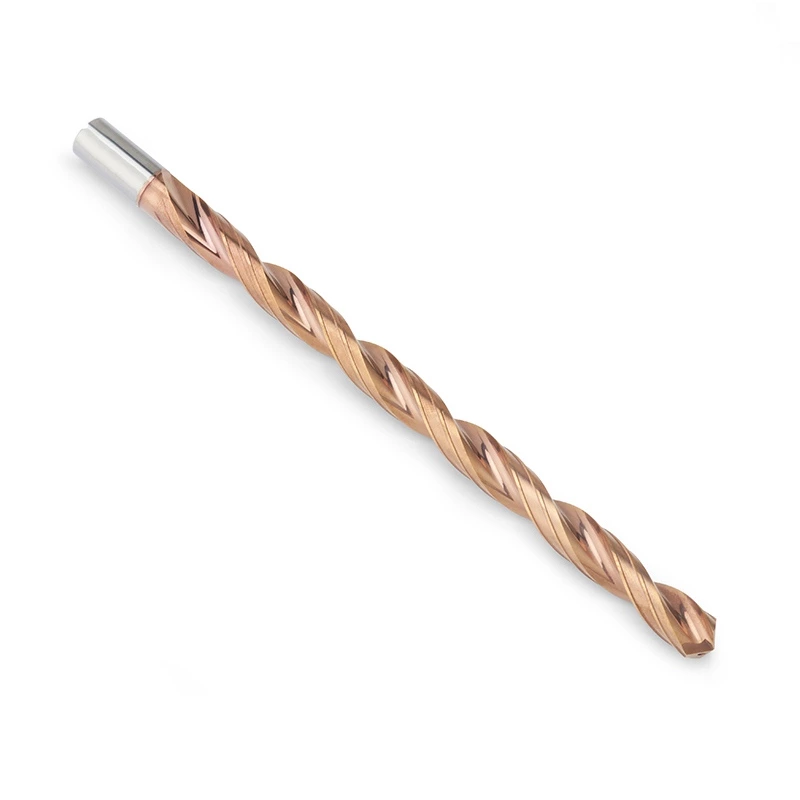
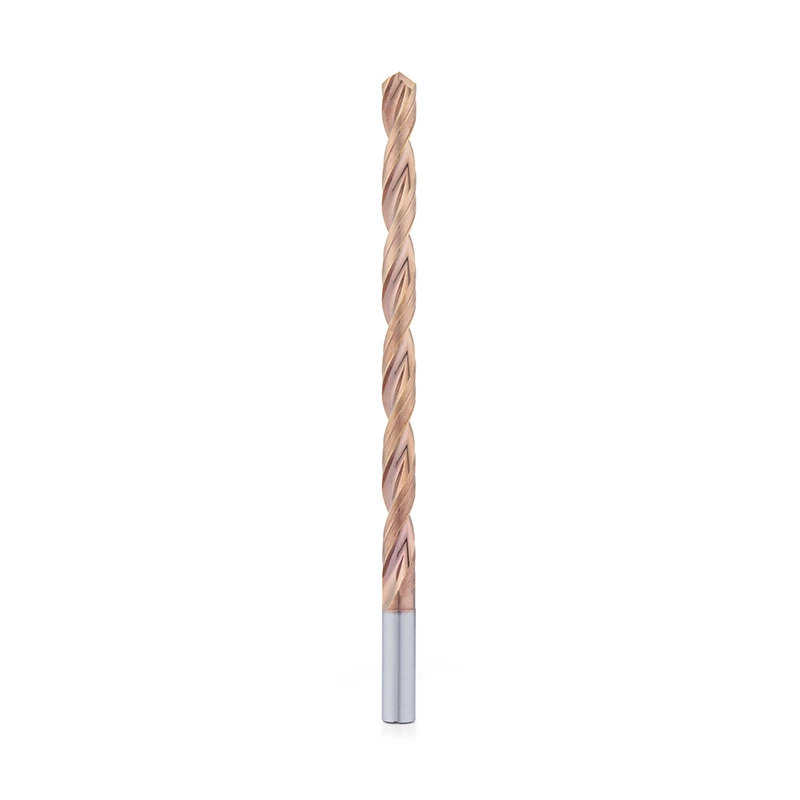
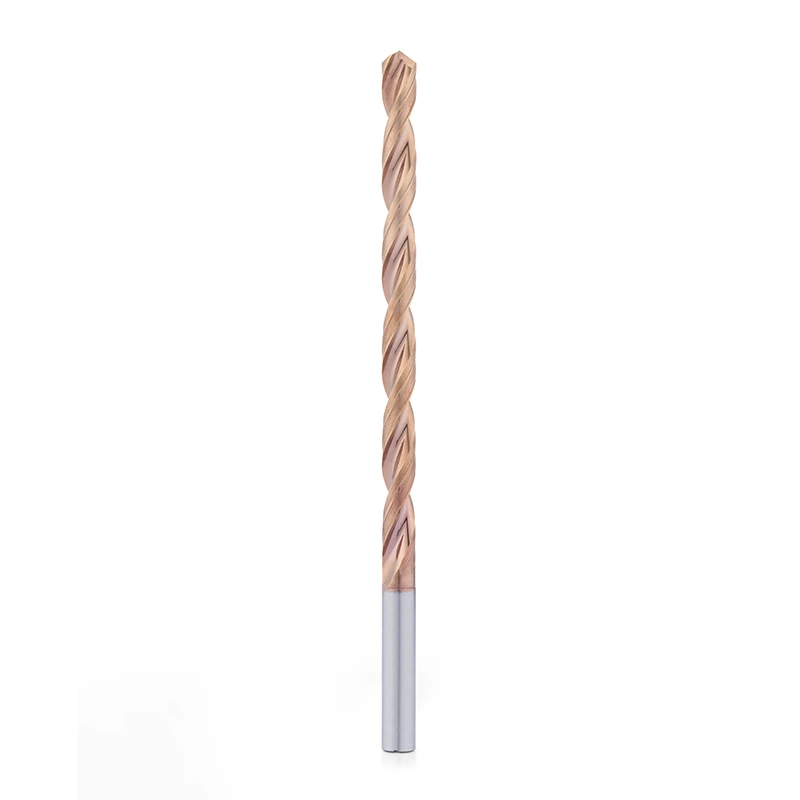
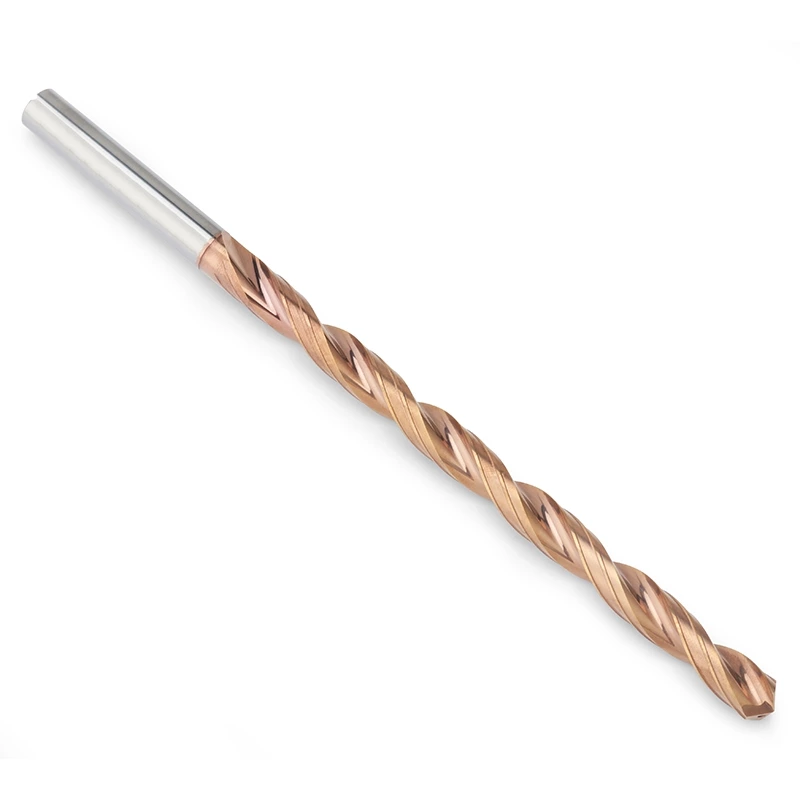
The 5xD micro carbide drill for hardened steel is developed for medium-depth small-diameter hole machining where cutting-edge strength, tool rigidity, chip evacuation, heat control, and dimensional consistency are critical.
Compared with a 3xD micro drill, the 5xD version has a longer cutting section and a longer chip evacuation path. The drill must maintain sufficient rigidity while continuously removing small chips from a deeper hole. In hardened steel applications, unstable chip flow, excessive spindle runout, insufficient coolant delivery, or uneven cutting loads can quickly cause micro-chipping, hole deviation, rapid wear, or tool breakage.
The drill is manufactured from imported MG grade 0.8 μm tungsten carbide rods with 10% cobalt content. Combined with application-specific coating, diameter-specific edge preparation, optimized flute and core geometry, German Walter 5-axis grinding, Walter Helicheck Plus inspection, and 300x magnification edge inspection, it supports stable medium-depth micro-hole drilling in hardened steel and heat-treated precision components.
| Item | Description | Item | Description |
|---|---|---|---|
| Product Name | 5xD Micro Carbide Drills for Hardened Steel | Drill Type | Micro Solid Carbide Drill |
| Hole Depth | 5xD | Application |
|
| Workpiece Material | Hardened steel, hardened mold steel, tool steel, die steel and heat-treated alloy steel | Carbide Material | Imported MG Grade 0.8 μm Tungsten Carbide |
| Coating | ALTISIXN Wear-Resistant Coating | Cobalt Content | 10% |
| Passivation Control | ±0.003 mm | Tool Life | Up to 80–100 Meters Under Suitable Machining Conditions |
| Service | Regrinding and Customization Available | Available Depth Series | 3xD, 5xD, 8xD, 12xD, up to 30xD |
Key Features
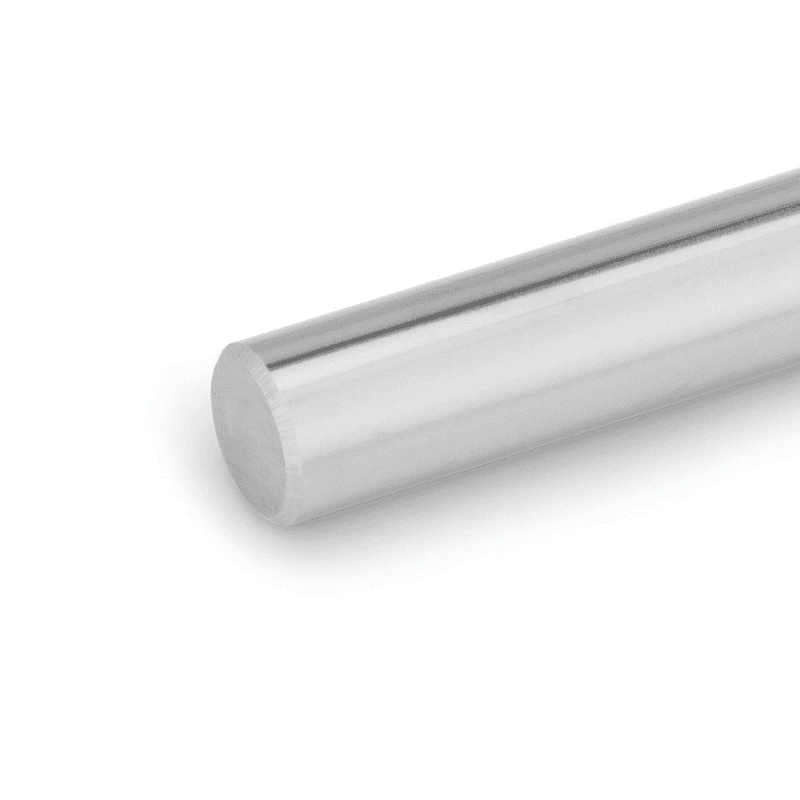
Made from imported MG grade 0.8 μm tungsten carbide with 10% cobalt content.
The fine carbide grain structure provides a balance of hardness and toughness, helping support the small cutting edges under the concentrated cutting loads generated during hardened steel micro-hole drilling.
For 5xD applications, the substrate must also provide sufficient transverse strength to resist bending and sudden breakage over the longer cutting length.
A heat-resistant and wear-resistant coating helps protect the micro cutting edges against concentrated cutting temperatures, abrasive wear, oxidation, and premature coating breakdown.
For small-diameter drills, coating thickness and edge coverage must be carefully controlled. Excessive coating thickness may increase edge rounding, reduce flute space, and increase drilling thrust.
The exact coating should be selected according to the hardened steel grade, workpiece hardness, drill diameter, and machining conditions.
The drill point and cutting edges are prepared according to the drill diameter and hardened steel application.
Controlled micro-edge preparation helps strengthen the cutting edge and reduce microscopic chipping while maintaining sufficient sharpness to control cutting force and heat generation.
A single passivation value should not be applied automatically to every micro-drill diameter because smaller drills require different edge-treatment control.
Accurate point symmetry, cutting-edge height, and chisel-edge position help distribute the cutting load evenly across both cutting edges.
Balanced geometry helps reduce drill walking, uneven wear, hole oversizing, excessive runout sensitivity, and premature breakage during hardened steel micro-drilling.
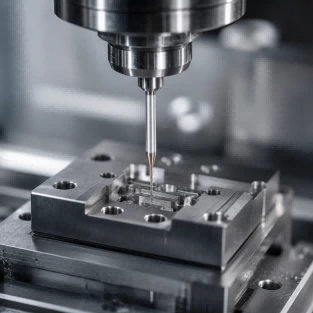
The 5xD micro carbide drill for hardened steel is suitable for medium-depth small-hole machining in CNC machining centers, high-speed drilling equipment, mold manufacturing, tool and die production, precision mechanical components, electronics fixtures, and other applications requiring stable micro-hole accuracy.
Send us your material and hole requirements. Our team will recommend the right drill solution.
Landun CNC Tool is a carbide drill manufacturer focused on precision solid carbide drills and custom carbide drill solutions, supported by advanced grinding, strict inspection, and consistent edge preparation.
Production Facility
Geometry Accuracy Control
Edge Inspection Magnification
Edge Passivation Control
Our carbide drills are ground on German WALTER 5-axis grinding machines for sharp cutting edges, stable accuracy, and smooth drilling performance.
We use WALTER HELICHECK PLUS for contour inspection, keeping profile and radius control within 3 μm for reliable geometric precision.
Each carbide drill is inspected at 300x magnification to check edge quality and avoid chipping or saw-tooth defects before shipment.
Manual drill point honing and automatic rubber-bonded diamond abrasive polishing help improve tool life and control edge consistency within ±0.003 mm.
Common Questions
5xD means that the drill is designed to produce a hole with a depth of up to approximately five times the drill diameter.
For example, a 1 mm micro drill is intended for a hole depth of approximately 5 mm under suitable machining conditions.
Yes. It is developed for medium-depth micro-hole drilling in hardened steel, hardened mold steel, tool steel, die steel, and heat-treated alloy steel within the confirmed hardness range.
The recommended hardness depends on the drill diameter, carbide grade, coating, hole depth, machine rigidity, spindle runout, coolant delivery, and cutting parameters.
A typical target range is HRC 45–55. Applications approaching HRC60 should be tested and validated before batch production, particularly for very small diameters or blind holes.
Spindle or tool-holder runout causes one cutting edge to carry more load than the other.
For a micro drill, even small runout can cause uneven wear, oversized holes, tool bending, unstable chip formation, or sudden breakage. A precision tool holder and low-runout spindle are strongly recommended.
Internal coolant versions may be available depending on drill diameter and manufacturing feasibility.
For very small diameters, external coolant, oil mist, or another accurately directed coolant method may be more practical. The existing Landun micro-drill page also states that internal coolant versions are available on request rather than standard across every diameter.
A pilot hole is generally not required when drilling on a flat, accurately positioned, and stable workpiece surface.
For inclined, curved, rough, interrupted, or highly demanding surfaces, a micro spot drill or shorter pilot drill may improve positioning stability.
Explore Our Products
We use cookies to collect information about how you use this site. We use this information to make the website work as well as possible and improve our services.more details